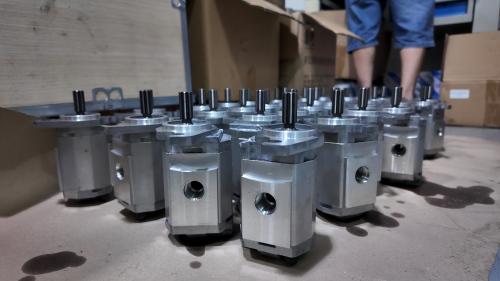
You can buy hydraulic cylinder parts through four main channels: OEM manufacturers and authorized dealers, independent aftermarket distributors, online B2B marketplaces, and local hydraulic repair shops. Each channel offers different advantages in pricing, availability, and technical support. The hydraulic cylinder market reached USD 16.19 billion in 2025 (Source: mordorintelligence.com, 2025), creating a competitive landscape where buyers benefit from multiple sourcing options across 130+ countries.
Choosing the right supplier depends on your specific requirements—urgency, budget constraints, technical complexity, and whether you need OEM-certified parts or aftermarket alternatives. Understanding these channels helps you balance cost, quality, and delivery speed for your equipment maintenance needs.
The global hydraulic parts supply chain operates through distinct channels, each serving different buyer needs. The hydraulic cylinder market grew from USD 16.82 billion in 2024 and projects to reach USD 21.44 billion by 2030 at a CAGR of 4.4% (Source: grandviewresearch.com). This growth has intensified competition among suppliers, ultimately benefiting buyers through improved availability and pricing.
Industrial buyers face a critical decision: source from original equipment manufacturers who guarantee compatibility, or explore aftermarket alternatives that promise cost savings. The hydraulic components market now includes over 113 active manufacturers in the United States alone (Source: metoree.com, 2025), plus hundreds of distributors and thousands of repair facilities worldwide.
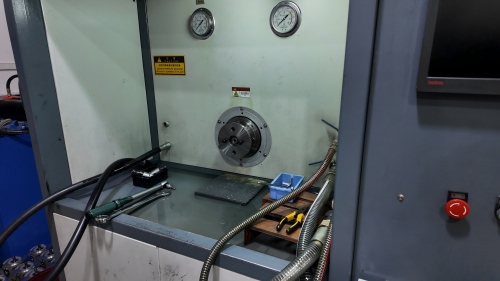
OEM Manufacturers and Authorized Dealers provide factory-direct parts with guaranteed compatibility. Major players include Bosch Rexroth, Parker Hannifin, Eaton Corporation, Caterpillar, and KYB Corporation. These suppliers typically charge premium prices but eliminate compatibility risks and often provide engineering support.
Independent Aftermarket Distributors offer replacement parts manufactured to meet or exceed OEM specifications at reduced costs. Companies like Bailey International, Hydraulic Cylinders Inc., and Modern Fluid Power maintain extensive inventories across multiple equipment brands. They serve as one-stop procurement partners for buyers managing diverse equipment fleets.
Online B2B Marketplaces have emerged as digital procurement hubs. Platforms range from general industrial marketplaces like Amazon Business to specialized hydraulic parts e-commerce sites. The global B2B e-commerce market reached US$30.42 trillion in 2024 and projects to hit US$66.89 trillion by 2029 (Source: dhl.com). These platforms aggregate multiple suppliers, enabling price comparison and faster procurement cycles.
Local Hydraulic Repair Shops provide immediate access to common parts and same-day emergency service. Regional specialists maintain relationships with equipment owners who value personal service and rapid turnaround for critical repairs.
Understanding the trade-offs between sourcing channels helps optimize your procurement strategy. Here’s how major channels compare across key decision factors:
OEM parts typically cost 30-50% more than aftermarket alternatives. However, this price differential narrows when factoring in warranty coverage, guaranteed fit, and reduced installation time. A standard 3-inch bore hydraulic cylinder ranges from $128 for aftermarket versions to $300+ for OEM-certified units (Source: farmandranchdepot.com, 2024).
Rebuild costs vary significantly by channel. Professional hydraulic cylinder rebuilds range from a few hundred to several thousand dollars depending on cylinder size, damage extent, and parts costs (Source: cylindersinc.com). Local shops typically charge $100-200 for basic rebuilds on smaller cylinders, while specialized facilities handling large mining or construction equipment cylinders may charge $500-2000+ per unit.
Independent distributors position themselves between OEM and bottom-tier pricing. They source quality aftermarket components while maintaining competitive margins. Volume buyers often negotiate 15-25% discounts through annual contracts with major distributors.
Asia Pacific led the global hydraulic cylinder market with 33.7% revenue share in 2024 (Source: grandviewresearch.com), creating geographic advantages for buyers near manufacturing hubs. However, lead times vary dramatically by channel:
Emergency situations demand local sourcing despite higher costs. Equipment downtime in construction or manufacturing operations typically costs $2,000-10,000+ per day, making expedited parts procurement economically justified.
OEM channels provide unmatched technical resources—engineering drawings, installation guides, compatibility verification, and warranty support. Their technical staff understand exact specifications and can troubleshoot complex issues. This expertise proves invaluable for custom hydraulic systems or critical applications where failure isn’t acceptable.
Independent distributors vary widely in technical capability. Established firms like Yates Cylinders and Bailey International employ experienced hydraulic technicians who can cross-reference parts across brands and recommend suitable alternatives. They bridge the gap between pure parts supply and engineering consultation.
Online marketplaces typically offer minimal technical support. Buyers must verify specifications independently, though some platforms provide detailed product datasheets and compatibility guides. This channel works best for experienced procurement professionals who understand their exact requirements.
Parker Hannifin Corporation manufactures standard, special tie rod, and mill type hydraulic cylinders for industrial applications across 55 countries. The company maintains authorized dealer networks providing local service and parts availability (Source: marketsandmarkets.com).
Bosch Rexroth AG offers comprehensive hydraulic cylinder portfolios with integrated smart monitoring capabilities. Their recent launch of high-efficiency hydraulic pumps demonstrates ongoing innovation in energy-efficient solutions (Source: persistencemarketresearch.com, 2024).
Eaton Corporation excels in customized cylinder solutions and aftermarket support through extensive service networks. The company provides specialized cylinders for mobile and industrial hydraulics applications (Source: marketresearchfuture.com).
Caterpillar Inc. supplies single and double-acting hydraulic cylinders designed for construction equipment, mining machinery, and heavy-duty applications. Caterpillar’s Construction Industries segment revenue rose 14% year-over-year, driven partly by strong hydraulic cylinder demand (Source: marketresearchfuture.com).
Bailey International operates with over 40 years of experience in mobile hydraulics, offering fast and free shipping on hydraulic cylinders, pumps, valves, and components. The company maintains multiple warehouses across the United States to streamline supply chains (Source: baileyhydraulics.com).
Hydraulic Cylinders, Inc. specializes in aftermarket replacement cylinders and component parts manufactured in the USA. Their FASTSHIP program processes and ships in-stock orders placed before 12:00 PM CST on the same day (Source: hydrauliccylindersinc.com, 2025).
Yates Cylinders operates the largest hydraulic cylinder repair facility in the Midwest with 24-hour availability and locations across Ohio, Michigan, Alabama, and Georgia. The company handles any make or model of cylinder with massive repair parts inventory (Source: yatesind.com, 2024).
Modern Fluid Power, Inc. has distributed fluid control components for over four decades, partnering with manufacturers like Fulflo, PCI, and Lynair to provide precision-tolerance hydraulic parts (Source: modernfluidpowerinc.com, 2020).
Hydraulic Parts Online LLC expanded its nationwide distribution network in December 2024, offering aftermarket components for Caterpillar, Komatsu, John Deere, Hitachi, and other major brands from its Wisconsin headquarters (Source: openpr.com, 2024). The company specializes in bushings, seal kits, hydraulic cylinders, and fittings at competitive prices with fast fulfillment.
Northern Hydraulics provides extensive online catalogs featuring welded cylinders, tie rod cylinders, dump hoist cylinders, and telescoping hydraulic cylinders. The company offers custom cylinder design services tailored to specific requirements (Source: northernhydraulics.net).
TVH maintains one of the largest inventories of hydraulic parts and components globally, with advanced e-commerce platforms and digital tools for parts identification and ordering. Their international sourcing network allows worldwide parts procurement (Source: dckap.com, 2024).
General industrial marketplaces like Amazon Business and specialized B2B platforms provide additional sourcing options. Gearflow.com hosts more than 70 online storefronts for construction equipment and parts, with average order values between $800-$900 (Source: digitalcommerce360.com, 2021).
Understanding real-world pricing helps budget accurately and evaluate supplier competitiveness. Prices vary significantly based on cylinder specifications, materials, and supplier type.
Standard welded hydraulic cylinders with 2-inch bore and 24-inch stroke start around $128 for aftermarket versions (Source: walmart.com). Stepping up to 2.5-inch bore with 18.25-inch stroke raises prices to approximately $192 for welded double-acting cylinders rated at 3500 PSI (Source: walmart.com).
Larger industrial cylinders command substantially higher prices. Custom heavy-duty cylinders for construction and mining equipment often range from $500 to $3,000+ depending on bore size, stroke length, and pressure rating. Specialty applications like telescopic cylinders or those with integrated sensors add 20-40% to base prices.
Volume purchasing significantly reduces per-unit costs. Distributors typically offer 10-20% discounts on orders of 4+ cylinders, with deeper discounts available for large fleet operators establishing annual supply agreements.
Hydraulic cylinder rebuilds for smaller 3-inch bore cylinders cost approximately $500, while onsite removal and replacement services run $160 per hour (Source: greentractortalk.com). These figures reflect 2024 pricing from established repair facilities with certified technicians.
Basic seal kit replacements on simple cylinders cost $100-$200 including labor at local shops. More complex repairs involving piston rod replacement, barrel honing, or thread repair can reach $400-$1,000 depending on cylinder size and damage severity.
The rebuild-versus-replace decision depends on several factors. Cylinders with extensive barrel damage, bent rods, or worn mounting eyes often cost more to repair than replace with aftermarket alternatives. However, custom or obsolete cylinders with no readily available replacements justify higher rebuild costs.
Shipping expenses for hydraulic cylinders vary by weight and dimensions. Standard ground shipping within the continental US typically costs $20-$100 for cylinders under 150 pounds. Freight shipments for larger cylinders add $100-$500+ to total costs. Most major distributors offer free shipping on orders exceeding minimum thresholds, typically $500-$1,000.
Expedited shipping for urgent repairs can cost 2-5 times standard rates. However, comparing expedited shipping costs against equipment downtime costs often justifies the expense. A construction excavator sitting idle costs far more than $200 in overnight freight charges.
Installation and commissioning costs deserve consideration when comparing prices. OEM parts designed for plug-and-play installation may require less labor than aftermarket alternatives needing modifications. Factor in mechanic hourly rates of $75-$150 when evaluating true procurement costs.
Selecting optimal suppliers requires matching channel strengths to your specific requirements. Use this decision framework to guide procurement strategy.
Emergency situations (equipment down, production stopped) demand local sourcing despite premium pricing. Identify local hydraulic repair shops and distributors before emergencies arise. Establish relationships that enable same-day or next-day parts access. Keep emergency contact lists for 24-hour service providers in your area.
Planned maintenance (scheduled downtime, routine overhauls) allows time for competitive bidding. Request quotes from 3-5 suppliers across different channels. Compare total delivered costs including shipping and any volume discounts. Lead times of 1-2 weeks prove acceptable for scheduled maintenance windows.
Fleet optimization (annual supply agreements, standardization projects) justifies extensive supplier evaluation. Consider multi-year contracts with major distributors or direct relationships with OEM regional managers. Negotiate pricing based on projected annual volumes, establish dedicated account management, and secure guaranteed availability for critical parts.
Standard replacement parts with clear part numbers work well through any channel. Cross-reference manufacturer part numbers using online databases or distributor catalogs. Aftermarket suppliers often provide OEM part number cross-references simplifying procurement.
Custom or modified cylinders require engineering support from OEM channels or specialized manufacturers. Provide detailed specifications including bore size, stroke length, mounting configuration, rod diameter, port sizes, and pressure ratings. Request CAD drawings or physical samples before placing orders.
Obsolete equipment parts present unique challenges. Specialized suppliers like Hydraulics Online focus on sourcing hard-to-find components for older equipment. Independent hydraulic procurement partners can source components through different suppliers, offering very good lead times and removing the risk of calling multiple manufacturers (Source: hydraulicsonline.com, 2024).
Critical applications (lifting equipment, safety systems, high-pressure operations) justify OEM parts despite higher costs. The consequences of component failure—potential injuries, major equipment damage, or production disruptions—outweigh price considerations. Verify parts include proper certifications and documentation.
General industrial use (moderate-duty applications, redundant systems) allows aftermarket alternatives from reputable suppliers. Look for distributors offering quality guarantees and return policies. Many aftermarket manufacturers meet or exceed OEM specifications while maintaining lower price points.
Budget-conscious projects (older equipment nearing end-of-life, cost-sensitive operations) may accept lower-tier aftermarket parts. Understand trade-offs in longevity and performance. Document decisions to use non-OEM parts in maintenance records for future reference.
Incorrect parts create expensive delays and duplicate shipping charges. Measure existing cylinders carefully:
Take photographs of mounting configurations and existing cylinders from multiple angles. Include rulers or measuring tapes in photos for scale reference. Email photos to suppliers along with measurements to confirm compatibility before ordering.
Check supplier credentials before establishing relationships:
ISO 9001 certification indicates quality management system compliance. Companies like Aggressive Hydraulics maintain ISO 9001:2015 certification (Source: aggressivehydraulics.com, 2024), demonstrating commitment to consistent quality standards.
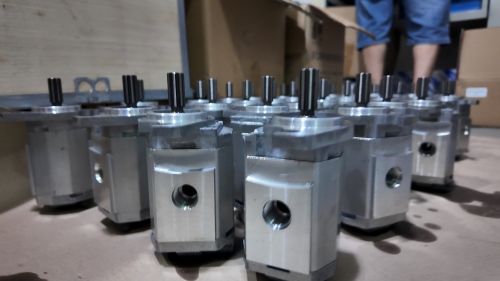
Industry tenure matters in hydraulic components. Suppliers operating 20+ years possess deep technical knowledge and established supply chains. They’re more likely to source obsolete parts and provide accurate cross-referencing.
Customer reviews and references provide unfiltered feedback. Search for supplier reviews on independent platforms. Request references from existing customers in your industry. Ask specific questions about lead time accuracy, technical support responsiveness, and return policy fairness.
Return policies protect against specification errors. Standard industry practice allows returns within 7-30 days for unused, unopened parts in original packaging. Many suppliers note that cylinders showing signs of use or filled with fluid are non-returnable, emphasizing the importance of careful measurement before ordering (Source: farmandranchdepot.com).
Diversify sourcing across multiple suppliers to reduce supply chain vulnerabilities. Identify at least one supplier in each channel category:
Consolidate purchasing with fewer suppliers to qualify for volume discounts and preferential treatment. Communicate annual projected volumes during initial discussions. Larger buyers often negotiate net-30 or net-60 payment terms, dedicated account managers, and priority fulfillment.
Maintain regular communication with key suppliers even when not actively purchasing. Share upcoming project schedules, equipment additions, and changing requirements. Suppliers appreciate visibility into future needs and reciprocate with proactive stock recommendations and early access to new products.
The cheapest supplier rarely provides the best value. A $50 savings on a $200 cylinder proves insignificant if the part fails prematurely and causes $5,000 in equipment downtime. Evaluate total cost of ownership including expected lifespan, warranty coverage, and failure consequences.
Extremely low pricing often signals substandard materials or manufacturing shortcuts. Hydraulic cylinders operate under immense pressures—cutting corners on seal quality, rod chrome plating, or barrel honing compromises safety and reliability. Stick with established suppliers offering reasonable pricing backed by quality guarantees.
Not all aftermarket parts truly match OEM specifications. Some manufacturers produce “universal fit” cylinders requiring modifications for proper installation. Request detailed specification sheets showing:
Reputable aftermarket suppliers provide detailed technical information and stand behind compatibility claims. Beware of sellers offering minimal product details or avoiding technical questions.
Supply chains remain unpredictable. Quoted lead times represent estimates, not guarantees. Build buffer time into maintenance schedules—if a supplier quotes 5-7 business days, plan for 10 days before the part becomes critical.
Order parts before reaching minimum stock levels. Establish reorder points based on lead times plus safety margins. Critical spare parts justify maintaining inventory despite carrying costs. The expense of stocking a backup cylinder pales compared to extended downtime waiting for expedited parts.
International shipments face additional delays from customs clearance, documentation requirements, and longer transportation distances. Asia Pacific’s dominance in hydraulic cylinder production creates geographic advantages for regional buyers but adds 3-6 weeks to North American deliveries (Source: grandviewresearch.com).
Major distributors dominate online searches, but local hydraulic shops provide valuable services often unavailable from large suppliers. They offer:
Build relationships with local specialists even if their pricing runs 10-20% higher than online alternatives. Their value becomes apparent during emergencies when you need immediate assistance and can’t afford to wait for shipping.
The industrial hydraulic equipment market projects 5.2% CAGR from 2024 to 2031, driven by construction activity growth and automation adoption (Source: persistencemarketresearch.com, 2024). This growth fuels investment in digital procurement platforms simplifying parts identification and ordering.
Advanced e-commerce platforms now offer 3D CAD model downloads, augmented reality visualization tools, and AI-powered compatibility verification. These technologies reduce ordering errors and improve buyer confidence in online procurement.
Marketplace aggregators continue gaining market share by consolidating multiple suppliers into single platforms. Buyers compare pricing, availability, and shipping options across dozens of suppliers in minutes rather than hours of phone calls and email exchanges.
Integration of sensors in hybrid actuator systems has improved efficiency and significantly reduced hydraulic cylinder repair and maintenance costs (Source: mordorintelligence.com, 2025). Smart cylinders with embedded position sensors, pressure transducers, and IoT connectivity enable predictive maintenance strategies.
These advanced systems generate data predicting seal wear before failure, alerting maintenance teams to schedule repairs during planned downtime rather than experiencing unexpected breakdowns. Suppliers offering smart cylinder options and compatible replacement parts position themselves for long-term relationships with forward-thinking buyers.
Growing emphasis on environmentally friendly hydraulic systems influences procurement decisions. Buyers increasingly seek cylinders compatible with biodegradable hydraulic fluids, leak-prevention technologies, and energy-efficient designs reducing overall system power consumption.
Suppliers demonstrating commitment to sustainability through ISO 14001 environmental certification, recycling programs for used cylinders, and eco-friendly packaging appeal to corporate buyers with environmental mandates. This trend reshapes competitive dynamics, rewarding suppliers investing in green technologies.
Measure your existing cylinder carefully, documenting bore size, stroke length, retracted length, extended length, rod diameter, port size, and mounting configuration. Take clear photographs from multiple angles including a ruler for scale. Contact suppliers with these measurements and photos—experienced technical staff can identify suitable replacements by cross-referencing specifications.
Many distributors maintain extensive cross-reference databases matching competitor part numbers and can identify alternatives from detailed measurements. Some suppliers offer free technical support helping buyers determine correct specifications even without original part numbers.
Quality aftermarket parts from reputable manufacturers meet or exceed OEM specifications at lower prices. Established aftermarket suppliers use similar materials, manufacturing processes, and quality control standards as OEM factories. Many aftermarket manufacturers produce parts for multiple OEM brands, demonstrating their manufacturing capability.
However, quality varies significantly among aftermarket suppliers. Stick with established distributors offering warranties and guarantees. Request detailed specifications confirming materials, pressure ratings, and testing standards. The cheapest options may use inferior seals or skip critical manufacturing steps like proper barrel honing.
Lead times vary by channel and part complexity. Local hydraulic shops provide same-day service for common parts in stock. Major distributors typically ship stocked items within 1-5 business days via ground shipping, arriving 2-7 days after order placement depending on distance.
Custom cylinders or special-order parts require 2-12 weeks depending on manufacturer production schedules. International orders from overseas manufacturers add 3-6 weeks for production, shipping, and customs clearance. Always request specific lead time estimates when placing orders rather than assuming availability.
Maintaining spare cylinder inventory makes economic sense for critical equipment where downtime costs exceed carrying costs. Calculate daily downtime expenses and compare against cylinder purchase price plus carrying costs. If a $500 cylinder prevents $5,000 in lost production, stocking spares proves cost-effective.
For non-critical equipment or applications where failures don’t halt operations, establishing relationships with suppliers offering expedited delivery may prove more economical than maintaining inventory. Balance inventory carrying costs against potential downtime losses and procurement lead times.
Start with small orders testing supplier responsiveness, product quality, and delivery reliability. Check for ISO certifications, industry affiliations, and business tenure. Search for independent reviews on platforms not controlled by the supplier.
Request customer references from companies in your industry or geographic region. Ask specific questions about technical support quality, lead time accuracy, product quality, and how the supplier handles issues. Verify the supplier maintains appropriate business insurance and bonding for your order size.
Supply complete specifications including bore size, stroke length, rod diameter, port size and thread type, mounting configuration, pressure rating, and intended application. Include OEM part numbers if available, even if seeking aftermarket alternatives.
Specify quantity requirements, desired delivery timeframe, and shipping destination. Mention if you’re comparing multiple suppliers—this often encourages competitive pricing. For custom cylinders, provide CAD drawings or detailed sketches with dimensions clearly marked.
Sourcing hydraulic cylinder parts successfully requires balancing multiple factors—urgency, budget, quality requirements, and technical complexity. No single channel serves all situations optimally.
For critical applications demanding certified quality and guaranteed compatibility, OEM manufacturers and authorized dealers provide peace of mind despite premium pricing. Their engineering support and comprehensive warranties justify higher costs when equipment failures carry serious consequences.
Independent aftermarket distributors offer compelling value for buyers managing large equipment fleets or seeking to reduce maintenance costs without sacrificing reliability. Established distributors with decades of experience provide quality parts, technical expertise, and responsive customer service at competitive prices.
Online B2B marketplaces enable efficient price comparison and access to suppliers nationwide. They work best for experienced buyers who understand their exact requirements and can verify specifications independently. The convenience and cost savings offset reduced personal service for routine purchases.
Local hydraulic repair shops fill critical gaps during emergencies and provide valuable services including on-site repairs, custom fabrication, and same-day parts access. Build these relationships before emergencies arise—their value becomes apparent when you need immediate assistance.
The optimal approach combines multiple channels strategically. Establish primary relationships with 2-3 preferred suppliers while maintaining backup options across different channels. This diversification ensures supply chain resilience while capturing competitive advantages from each sourcing method.
Success in hydraulic parts procurement comes from understanding your specific needs, thoroughly evaluating supplier capabilities, and building strong relationships with reliable partners. The investments you make in supplier selection and relationship management pay dividends through improved equipment uptime, reduced maintenance costs, and greater operational flexibility.