
Choosing the wrong hydraulic power unit can turn a $150,000 excavator into an expensive paperweight. I’ve seen construction managers make this mistake more times than I’d like to admit—grabbing whatever HPU fits the budget, only to watch it fail three months into a project when operating in 95°F heat or struggling with the dust on a remote job site.
The truth is, mobile equipment demands a different breed of hydraulic power unit than stationary industrial systems. When your equipment needs to perform reliably on a construction site in Arizona, a logging operation in Oregon, or a farm field during harvest season, you can’t afford to get the specifications wrong.
The good news? Once you understand the five critical decision factors, selecting the right hydraulic power unit becomes straightforward. This guide cuts through the technical jargon to give you a practical framework for matching HPUs to your specific mobile equipment needs.
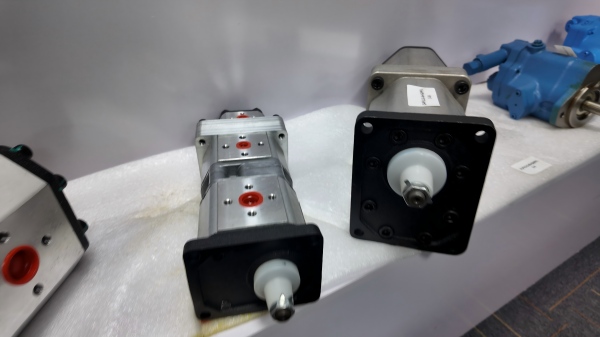
A hydraulic power unit converts mechanical energy into hydraulic power that drives cylinders, motors, and other actuators. For mobile applications, these units must be compact, durable, and capable of operating in variable conditions while mounted on equipment that moves constantly.
Mobile HPUs differ from industrial units in three crucial ways: they prioritize portability and weight reduction, they’re engineered to withstand vibration and environmental extremes, and they often need to operate independently without access to consistent electrical power or climate control.
The global mobile hydraulic power unit market reached $10.22 billion in 2024 and is growing at 5.85% annually through 2034, driven primarily by construction, agriculture, and mining sectors (Polaris Market Research). This growth reflects the increasing mechanization of mobile operations worldwide—but it also means more options to navigate when making your selection.
Here’s a fact that surprises many equipment managers: hydraulic motors deliver approximately 13 times the power density of similarly sized electric motors (Fast Flow Pump). This explains why hydraulic power units dominate mobile equipment applications where weight and size constraints matter.
When you’re mounting power systems on excavators, agricultural tractors, or forestry equipment, every pound counts. A compact hydraulic power unit can deliver the force needed to operate heavy implements without adding excessive weight that would reduce mobility, increase fuel consumption, or require larger tires and suspension systems.
This power density becomes especially valuable in applications like:
Flow rate—measured in gallons per minute (GPM) or liters per minute (LPM)—determines how fast your hydraulic actuators move. Get this wrong, and your equipment either operates sluggishly (too little flow) or wastes energy and generates excessive heat (too much flow).
For agricultural equipment like round balers, you typically need at least 12 GPM hydraulic flow paired with 65 PTO horsepower for efficient operation (MCH Parts NYC). But for versatility and future equipment additions, targeting minimum 80 PTO HP with 10 GPM provides better long-term value.
Sizing flow rates properly:
The reservoir size should typically be 3 to 5 times the system’s flow rate in gallons per minute, but this can be optimized based on duty cycle and cooling requirements (Supreme Integrated Technology).
Operating pressure, expressed in PSI or bar, determines the force your system can generate. Mobile equipment faces diverse pressure requirements:
The 2000-3000 PSI range dominates the mobile hydraulic market with 42.4% market share, suitable for most construction and agricultural applications (Future Market Insights). However, specialized applications demand different ranges:
One construction fleet operator achieved a 15% reduction in fuel consumption and 35% improvement in cycle times by switching to properly sized 4200 PSI excavator hydraulic power units with variable displacement systems (IsoHiTech).
The power source you choose fundamentally shapes your HPU’s capabilities and limitations:
Electric hydraulic power units currently hold 53.7% of the market share and are growing (Future Market Insights). They offer:
Electric units work best when you have consistent power access or when integrating with battery-powered equipment. The rise of electro-hydraulic power units (eHPUs) in mobile machinery is accelerating, with efficiency gains over traditional combustion-powered systems (Cross Mobile Systems).
Diesel hydraulic power units excel in:
Gasoline power units offer a middle ground:
DC power units (12V, 24V, 48V) provide:
For agricultural mechanization, dealers report that diesel-powered units remain popular for primary tractor-mounted applications, while electric units increasingly serve specialized functions like precision planting systems.
Mobile equipment operates in conditions that would shut down many industrial systems. Your HPU must handle what the field throws at it.
Temperature extremes matter more than most realize. Standard hydraulic power units typically operate within -20°C to 50°C, but specialized mobile units can function from -40°C to 50°C (Prior Power Solutions). An HPU designed for an Antarctic research station crane demonstrated this capability, operating reliably between -40°C and 30°C with appropriate fluid selection and thermal management.
Environmental challenges by application:
Construction sites:
Agricultural operations:
Forestry operations:
Mobile HPUs address these challenges with robust enclosures, high-capacity air filtration, oversized heat exchangers for continuous operation, and weather-resistant components and connections.
Zeus Hydratech supplied four mobile hydraulic power packs to a Formula 1 team that needed units compact enough to fit in transport cases, light enough for frequent moves between global race locations, yet capable of delivering precise pressure control trackside. This demonstrates how mobile HPU design must balance multiple competing requirements.
How long and how hard your equipment runs determines whether your HPU will last five years or need replacement in five months.
Duty cycle categories:
Heat generation follows this formula: Heat Load (BTU/hr) = (Input HP – Output HP) × 2,545. As a general guideline, you need 1 square foot of heat exchanger per 1,000 BTU/hr of heat load (IsoHiTech).
For continuous duty applications common in agriculture and construction, proper cooling isn’t optional. Load-sensing hydraulic systems can reduce energy consumption by 30-50% compared to traditional systems, significantly reducing heat generation while improving efficiency (IsoHiTech).
One construction company documented the impact of proper thermal management: after upgrading to HPUs with enhanced cooling systems, they achieved a 50% reduction in hydraulic-related downtime and $180,000 in annual savings across their 25-unit fleet.
These lightweight, wheeled units serve mobile crews who move between job sites. Think concrete cutting contractors, emergency response teams, or maintenance operations.
Typical specifications: 25-100 HP output, 6-gallon reservoirs, cart-mounted with 16-inch pneumatic tires (RGC Tools). Many include lifting eyes and detachable handles for easy loading and transport.
RGC’s HydraPak line demonstrates the category: gas-powered units with variable flow and pressure settings, electric start, and powder-coated tubular steel frames for durability. The wheels can be removed for permanent mounting in trucks or other vehicles.
These units mount permanently or semi-permanently on mobile equipment like excavators, agricultural tractors, or forestry machines.
Construction equipment like excavators typically requires 1200 PSI and 400 GPM for concrete pumping applications, or 2000 PSI for truck mixer operation (IsoHiTech). These units feature extended service intervals (2,000+ hours between maintenance) designed around the reality that mobile equipment operates in environments where frequent service isn’t practical.
Modern agricultural equipment increasingly relies on hydraulic systems for precision control. Smart hydraulic systems with electronic controls automatically adjust flow rates and pressures as tractors transition from transport to field work, providing optimal power without wasting energy (Hydroll).
Agricultural HPUs must integrate with precision farming technology. When a planter transitions from headland turns to in-field planting, the hydraulic system needs to respond instantly. Advanced sealing technologies and improved component designs minimize internal leakage while extending component life—critical for reducing downtime during narrow planting and harvesting windows.
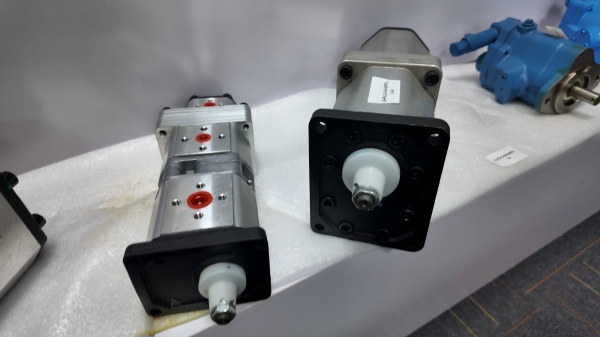
Forestry equipment hydraulic systems face constant vibration, temperature extremes, and contamination risks. HPUs for forestry applications typically feature: heavy-duty filtration rated for high particulate environments, shock-absorbing mounts to protect components from vibration, extended maintenance intervals suitable for remote operations, and multi-function capability to power diverse attachments.
These units often power log splitters, delimbing equipment, and feller bunchers—all of which require substantial force while operating far from service facilities.
The shift toward electrification is accelerating. Electric hydraulic power units deliver efficiency improvements from the upper 90% range—dramatically better than internal combustion engine-powered hydraulic systems (Cross Mobile Systems).
Dana Motion Systems’ EcoHydraulics line exemplifies this trend, featuring high-efficiency pumps, regenerative circuits, and smart controls to reduce energy waste. Their latest HPUs support hybrid hydraulic-electric solutions, enabling construction and agricultural equipment to operate more efficiently while reducing environmental impact.
Load-sensing control technology automatically adjusts pressure and flow based on real-time demands, saving 30-50% energy compared to traditional systems (IsoHiTech). This means a tractor that automatically provides full hydraulic power when pulling a heavy implement through tough soil, then instantly reduces flow and pressure when crossing a farm road—all without operator intervention.
Advanced control systems also enable predictive maintenance. Integrated sensors monitor system health, tracking parameters like fluid temperature, pressure fluctuations, filter condition, and pump performance. When data indicates developing problems, the system alerts operators before catastrophic failure occurs.
Between 2030 and 2035, the hydraulic power unit market will experience accelerated growth driven by compact high-pressure units for specialized applications (Future Market Insights). These designs pack more power into smaller footprints, essential for modern mobile equipment where every cubic inch matters.
Manufacturers are achieving this through advanced materials, precision manufacturing that reduces internal losses, and innovative component layouts that maximize packaging efficiency.
Here’s how to apply this information when selecting an HPU for your mobile equipment:
Step 1: Calculate Your Requirements
List every hydraulic function your equipment performs. For each function, determine:
Add 20% safety margin to your calculations—equipment rarely operates at theoretical maximums, and this buffer prevents overheating and premature wear.
Step 2: Assess Your Operating Environment
Document the harshest conditions your equipment faces:
If you operate in multiple environments (for example, construction equipment that works both urban and remote sites), design for the most challenging conditions.
Step 3: Evaluate Total Cost of Ownership
The cheapest initial price rarely delivers the lowest total cost. Factor in:
One agricultural operation calculated that upgrading to premium HPUs with load-sensing control paid for itself in 18 months through reduced fuel consumption alone—before accounting for increased reliability and reduced downtime.
Step 4: Consider Future Needs
Mobile equipment typically operates for 10-15 years. Your HPU selection should account for:
Selecting an 80 HP unit instead of a 65 HP unit adds upfront cost but provides capacity for future implements without requiring a complete hydraulic system replacement.
After analyzing hundreds of hydraulic system failures in mobile equipment, certain patterns emerge:
Underestimating heat generation. The math is unforgiving—if you don’t properly cool your hydraulic fluid, the system will fail. Period. Oil degradation accelerates dramatically above 180°F, breaking down additives and causing premature component wear. For continuous-duty applications, invest in oversized cooling capacity.
Ignoring filtration quality. Hydraulic systems are only as reliable as their cleanest component. Mobile equipment operates in dirty environments, making contamination control critical. Inadequate filtration causes 70-80% of hydraulic system failures. Don’t skimp on high-quality filters and proper maintenance schedules.
Mismatching power sources. Electric HPUs work brilliantly—when you have reliable power. In remote locations without electrical infrastructure, diesel units aren’t optional, they’re necessary. Match your power source to your actual operating conditions, not your ideal conditions.
Overlooking duty cycle. I’ve watched equipment managers select an HPU sized for peak power requirements, then run it continuously at 90% capacity. That unit was designed for intermittent operation with cool-down periods. It failed within 8 months. Always specify duty cycle accurately and select components rated for your actual usage pattern.
Neglecting environmental protection. A construction HPU without proper dust seals and weather protection might work fine for six months, then suffer catastrophic failure when fine silica dust infiltrates seals and abrades internal components. Environmental protection isn’t a nice-to-have feature—it’s insurance against expensive repairs.
Construction hydraulic power units face brutal operating conditions: constant vibration from rough terrain, temperature swings from early morning to midday heat, dust and debris in the air, and the expectation of immediate response when operators demand full power.
Successful construction HPUs typically feature: 2000-3000 PSI operating pressure, diesel or dual-fuel capability for remote sites, ruggedized enclosures with impact protection, and oversized filtration for particle removal.
Service intervals matter enormously. Equipment that needs maintenance every 500 hours sits idle while nearby units continue working. Target 2,000+ hour service intervals by selecting premium components and implementing proper preventive maintenance protocols.
Agricultural mechanization continues accelerating globally, with India and China particularly focused on farm equipment modernization (Markets and Markets). This creates growing demand for hydraulic power units that can withstand seasonal extremes while delivering precision control.
Agricultural HPUs must handle: organic debris (chaff, dust, pollen), temperature extremes between planting and harvest seasons, extended continuous operation during narrow harvest windows, and integration with precision agriculture technology.
The Ferguson Three-Point Hitch tractor established standards for hydraulic integration in agricultural machinery that remain relevant today (MCH Parts NYC). Modern agricultural HPUs build on this foundation with electronic control systems, cloud-based monitoring capabilities, and smart adjustments for implement-specific requirements.
Piston accumulators prove particularly valuable in agricultural applications because they provide energy storage, shock absorption, and pressure stabilization—critical when ground engagement creates variable resistance that could damage hydraulic systems without proper protection (Hydroll).
Forestry equipment demands the most robust hydraulic power units. Operating in remote locations, subject to constant vibration, and exposed to wood chips, sawdust, and temperature extremes, forestry HPUs need extraordinary durability.
Key forestry specifications: extended service intervals (often 2,500+ hours), enhanced vibration isolation, industrial-grade filtration, and multi-function control for diverse attachments.
Forestry operations typically can’t wait for parts or service. When a delimber’s hydraulic system fails deep in a forest during harvest season, the cost includes not just repair expenses but also idle crew and equipment. This makes reliability worth substantial premiums in component selection.
Selecting the right HPU is only half the equation. Proper maintenance determines whether your unit delivers 5,000 hours of service or needs replacement at 2,000 hours.
Critical maintenance practices:
Fluid analysis: Regular hydraulic fluid testing detects contamination before it causes damage. Water contamination is particularly destructive—it depletes rust inhibitors and causes direct corrosion of steel components. Vacuum dehydration is the only comprehensive method to effectively remove water vapor from hydraulic oil (Fluid Power Journal).
Filter management: Change filters based on actual contamination levels, not arbitrary schedules. Differential pressure indicators show when filters need replacement. Running on clogged filters causes cavitation and pump damage—but changing filters prematurely wastes money.
Temperature monitoring: Hydraulic fluid should operate between 100°F and 150°F for optimal performance. Temperatures above 180°F accelerate fluid breakdown. Install temperature sensors and respond immediately when readings exceed normal ranges.
Vibration analysis: For mobile equipment, abnormal vibration often indicates mounting problems, unbalanced components, or developing bearing failures. Regular vibration monitoring catches problems before catastrophic failure.
Component remanufacturing delivers 70-80% cost savings compared to new components (IsoHiTech). Many mobile equipment operators maintain a rotating stock of remanufactured pumps, motors, and cylinders, allowing immediate replacement when failures occur while damaged components undergo remanufacturing.
The mobile hydraulic power unit market will continue transforming through 2035, driven by electrification trends, IoT integration, and efficiency demands.
Electric and hybrid systems will capture increasing market share as battery technology improves and environmental regulations tighten. The transition is already visible in urban construction equipment, where noise and emission restrictions favor electric HPUs.
Predictive maintenance will shift from experimental to standard. IoT-connected HPUs already monitor system health in real-time, alerting operators to developing problems. As AI algorithms improve, these systems will predict failures with increasing accuracy, enabling proactive maintenance that prevents unplanned downtime.
Load-sensing and variable displacement technologies will become standard rather than premium features. The energy savings and improved efficiency justify the technology’s cost, particularly as fuel prices remain volatile.
Compact high-pressure designs will enable new mobile equipment configurations. As manufacturers pack more power into smaller footprints, equipment designers gain flexibility in machine layout and weight distribution.
Choosing a hydraulic power unit for mobile equipment demands careful analysis of your specific requirements, honest assessment of operating conditions, and realistic evaluation of total cost of ownership.
Start with accurate calculations of flow, pressure, and duty cycle requirements. Add safety margins—mobile equipment rarely operates at ideal conditions. Evaluate your harshest operating environment and design for those conditions. Compare total cost of ownership, not just purchase price.
Partner with suppliers who provide comprehensive engineering support, proven manufacturing capabilities, and ongoing service. The right supplier relationship matters as much as component selection—when equipment fails in the field, responsive support makes the difference between hours of downtime and days.
The mobile hydraulic power unit market offers unprecedented options today. From micro units for portable tools to 700 HP systems for heavy construction equipment, solutions exist for virtually every application. The challenge isn’t finding a hydraulic power unit that works—it’s finding the one optimized for your specific needs.
Equipment that operates reliably, maintains productivity during critical periods, and delivers years of service without major repairs doesn’t happen by accident. It results from informed selection, quality components, proper installation, and diligent maintenance.
Your mobile equipment represents substantial investment. Choose the hydraulic power unit that protects that investment while delivering the performance your operations demand.
Mobile HPUs prioritize compact size, weight reduction, and environmental ruggedness over maximum power output. They’re designed to withstand constant vibration, temperature extremes, and contamination while operating without consistent electrical power or climate control. Stationary units focus on maximum power and continuous operation in controlled environments.
List every hydraulic function and determine the flow rate (GPM or LPM) needed for each. If functions operate simultaneously, add the flow rates together. If they operate sequentially, use the highest individual flow requirement. Add 20% safety margin to your total. For agricultural equipment like balers, plan for minimum 12 GPM; for versatility, target 15-20 GPM or higher.
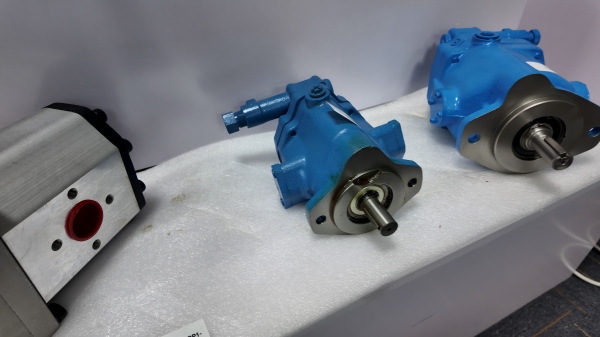
Diesel units excel in remote locations without electrical infrastructure, continuous high-demand operations, and heavy-duty applications requiring 25-700 HP. In forestry operations, mining sites, or remote construction projects, diesel power isn’t a choice—it’s necessity. Electric units dominate where electrical power is reliable and emissions/noise matter.
Service intervals depend on operating conditions and duty cycle. Standard mobile units typically need service every 1,000-2,000 hours, but premium units in clean environments may extend to 2,500+ hours. More frequent service is needed in dusty, contaminated, or continuous-duty applications. Base intervals on actual fluid condition and manufacturer recommendations, not arbitrary schedules.
Often, yes. Many hydraulic power units can be upgraded with variable displacement pumps, improved controls, enhanced cooling, or electronic monitoring systems. Evaluate whether upgrade costs justify the benefits versus replacement with modern equipment. In some cases, partial upgrades extend system life while gradually improving performance and efficiency.
Contamination causes 70-80% of hydraulic system failures, typically from inadequate filtration or compromised seals allowing dust and debris into the system. Other major failure causes include overheating from insufficient cooling capacity, incorrect fluid viscosity for operating temperatures, and operating beyond rated duty cycle. Proper component selection, quality filtration, and regular maintenance prevent most failures.
Load-sensing systems automatically adjust pump output to match actual system demand, reducing flow and pressure when full power isn’t needed. Traditional systems maintain constant maximum pressure, wasting energy over relief valves as heat. Load-sensing can save 30-50% energy—a tractor provides full power pulling implements through heavy soil, then automatically reduces output when driving on roads.
Yes, with proper design. Electric HPUs can include fluid heaters for cold starts and insulated reservoirs to maintain operating temperature. Some units designed for extreme conditions (like Antarctic research facilities) operate reliably from -40°C to 30°C. Cold climate operation requires appropriate hydraulic fluid selection, thermal management, and sometimes preheating systems.
Sources:


