
Yes, hydraulic motors absolutely generate torque—and they’re exceptionally good at it. That’s exactly why they power everything from excavators tearing through bedrock to precision manufacturing equipment requiring controlled rotation. But here’s what most explanations miss: understanding how they generate torque reveals why a compact hydraulic motor can outperform much larger electric motors in specific applications, and why your torque calculations might be off by 20% if you’re ignoring three critical factors.
The short answer satisfies curiosity. The complete answer transforms how you select, size, and troubleshoot these machines.
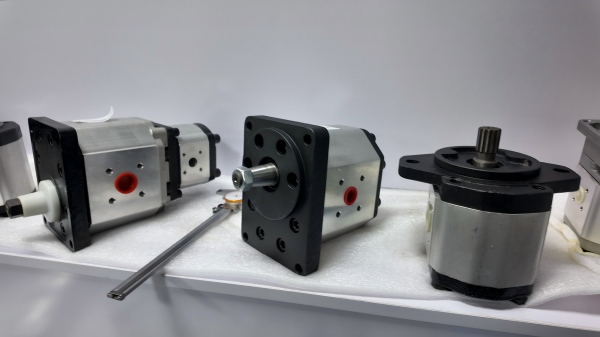
Most technical discussions jump straight into formulas, but that skips the fundamental physics that explain why hydraulic motors generate torque differently than any other power source. Understanding these three layers—pressure differential, mechanical conversion, and real-world efficiency—is the key to making informed decisions.
Hydraulic motors generate torque through a deceptively simple principle: pressure differential across internal components creates an unbalanced force that must be resolved through rotation.
Here’s what actually happens inside. High-pressure hydraulic fluid enters the motor and acts on mechanical surfaces—pistons, vanes, or gear teeth depending on motor type. These surfaces are positioned asymmetrically within the motor housing, creating an imbalance. The fluid on the high-pressure side pushes with substantially more force than the low-pressure return side. This imbalance doesn’t create linear motion—it creates rotational force, which is torque.
A 2024 analysis from Bosch Rexroth demonstrates this principle quantitatively: at 3,000 psi system pressure, each square inch of piston surface experiences roughly 3,000 pounds of force. When that force acts through a moment arm (the distance from the center of rotation), you get torque. The beauty of hydraulic systems lies in how this pressure can be maintained consistently, unlike combustion engines where pressure pulses create torque variations.
What makes this different from electric motors: Electric motors generate torque through electromagnetic fields interacting with current-carrying conductors. Hydraulic motors use incompressible fluid pressure. This distinction matters because fluid pressure can deliver consistent torque from zero RPM—something electric motors struggle with. That’s why hydraulic motors provide 75-80% of their maximum design torque at startup, while electric motors typically need to build speed before reaching peak torque.
Pressure creates force, but displacement converts that force into torque. This is where the math becomes critical—and where many selection mistakes happen.
Displacement refers to the volume of fluid required to rotate the motor shaft through one complete revolution, typically measured in cubic centimeters per revolution or cubic inches per revolution. A motor with larger displacement generates more torque at the same pressure because it has more surface area for the fluid to act upon.
The fundamental relationship is expressed through this equation:
T = (P × D) / (2π)
Where:
Let’s break this down with a real-world example. A hydraulic motor with 100 cubic centimeter displacement operating at 200 bar pressure generates approximately 318 Newton-meters of theoretical torque. The calculation: (200 bar × 100 cm³) / (2π) = 318 Nm. Double the displacement to 200 cm³ while keeping pressure constant, and torque doubles to 636 Nm. This linear relationship is why displacement selection is so critical.
The 2025 hydraulic equipment market data shows that piston motors—which can achieve displacements from 40cc to over 250 liters per revolution—dominate high-torque applications precisely because of this displacement-torque relationship. According to GMI Research, the piston motor segment generated $5.68 billion in revenue in 2023, accounting for nearly half the total hydraulic motor market, driven by applications requiring both high torque and precise control.
Here’s where theory meets reality, and where 15-25% of your calculated torque can disappear if you’re not careful.
Theoretical torque is what the formula predicts. Actual torque is what you get at the shaft after accounting for three types of losses:
Mechanical friction losses occur between moving parts—piston seals against cylinder walls, bearings supporting rotating shafts, and vanes sliding in their slots. These losses are relatively constant regardless of speed or load, which is why hydraulic motors are less efficient at partial loads. A 2024 efficiency analysis by Danfoss found that mechanical losses typically consume 5-10% of input energy across common motor designs.
Volumetric losses happen through internal leakage—fluid bypassing from high-pressure to low-pressure regions through clearances between components. Unlike friction, volumetric losses increase with pressure and decrease with viscosity. Operating at 5,000 psi versus 2,000 psi can double your leakage rate if clearances aren’t precisely controlled. This is why gear motors, with their simpler sealing surfaces, typically show lower volumetric efficiency (85-90%) compared to piston motors (92-98%).
Hydraulic losses include pressure drops through ports, valves, and internal passages. These are often overlooked but can be significant, especially at high flow rates. A partially restricted inlet can drop effective pressure by 200-300 psi before fluid even reaches the working surfaces.
The result: running torque for most hydraulic motors sits around 90% of theoretical torque under optimal conditions. Starting torque—the torque available from a dead stop—typically ranges from 70-80% of maximum because static friction exceeds dynamic friction. These aren’t just numbers for formulas; they’re the difference between a motor that can start your load and one that stalls.
The global hydraulics market reached $44.08 billion in 2024, with hydraulic motors representing roughly $12-13 billion of that total. Construction equipment alone accounts for 19% of hydraulic motor demand. These aren’t just comfortable market positions—they reflect fundamental advantages in how hydraulic systems generate and control torque.
Ask any equipment operator what makes hydraulic drive systems special, and you’ll hear about LSHT—Low Speed, High Torque. This capability stems directly from the physics of fluid power.
Consider a mining excavator’s swing drive. The motor needs to rotate a 50-ton upper structure at perhaps 10-15 RPM while generating thousands of foot-pounds of torque. An electric motor attempting this would require extensive gearing, adding weight, complexity, and maintenance points. A hydraulic motor accomplishes it directly through displacement and pressure.
The inverse relationship between speed and torque in hydraulic systems works differently than in other power sources. For a given horsepower, the equation HP = (Torque × RPM) / 63,025 shows that reducing speed proportionally increases torque. But hydraulic motors can operate smoothly at creep speeds (under 10 RPM) while maintaining full torque—something that would cause electric motors to overheat or operate erratically.
Radial piston motors take this to extremes. The crankshaft-type design, used in applications from Staffa and SAI, can produce virtually constant torque from under 1 RPM to 1500 RPM. Try asking an electric motor to maintain constant torque across a 1500:1 speed range without complex controls.
Hydraulic motors provide another critical advantage: instantaneous torque availability. Unlike electric motors that need to build magnetic fields or internal combustion engines that rely on combustion cycles, hydraulic motors respond within milliseconds of valve actuation.
This matters in applications like emergency braking systems, where hesitation measured in tenths of a second can mean disaster. It matters in precision manufacturing where rapid direction changes are routine. And it matters in mobile equipment where operator feel and control directly impact productivity.
A 2023 study on compaction equipment by Caterpillar demonstrated this practically. Their CS56 soil compactor uses a hydraulic motor driving eccentric weights at 1,800 RPM to generate 31.9 Hz vibration. The motor can reverse direction—changing the amplitude from high (282 kN) to low (141 kN)—simply by reversing fluid flow. No electronic controllers, no complex algorithms. Just fluid direction.
Here’s a scenario that exposes the differences: You’re operating a winch pulling a stuck vehicle up an incline. As the load increases, what happens to torque?
With a gasoline engine direct-driving the winch, increasing load slows the engine, moving it out of its power band. Torque drops. With an electric motor, increased load draws more current. Eventually, you hit thermal limits or trip an overload. With a properly sized hydraulic system, the motor maintains torque—limited only by system pressure and displacement.
This comes down to how hydraulic motors generate torque through incompressible fluid. Pressure is load-dependent. Need more torque? The pump works harder to maintain pressure against increased resistance, but the motor keeps turning as long as pressure is available. The system self-adjusts within its design limits.
Field data from construction equipment supports this. A Mordor Intelligence analysis noted that hydraulic motors maintain roughly 90% efficiency across 40-100% of rated load, while electric motors can drop to 70-75% efficiency at partial loads. For equipment spending significant time at variable loads—like excavators, mixers, and conveyors—this efficiency characteristic saves energy and extends component life.
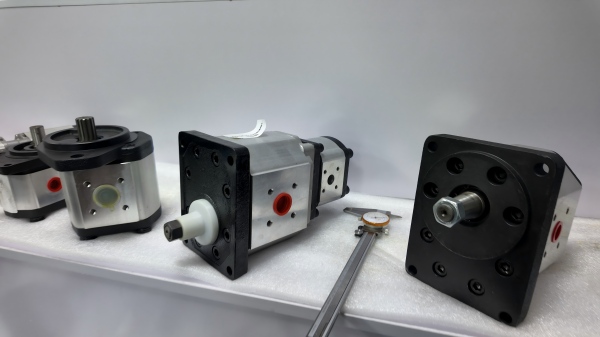
Not all hydraulic motors generate torque equally. Design dictates performance, and matching motor type to application is where good engineering earns its keep.
External gear motors consist of two meshing gears in a housing. Pressurized fluid enters where the gears mesh, flows around the gear tips, and exits on the opposite side. The gears prevent backflow, and the pressure differential on the teeth generates torque.
Torque characteristics: Gear motors offer modest torque with relatively high speed capabilities. Running torque typically hits 90% of theoretical, with starting torque around 70-75%. They’re not high-torque champions, but they’re reliable and economical.
The real advantage isn’t peak torque—it’s what happens when things go wrong. Gear motors fail gradually. As the housing and gears wear, volumetric efficiency drops slowly over thousands of hours. You’ll notice decreasing performance long before catastrophic failure, unlike some designs that fail suddenly. For agricultural equipment and industrial conveyors where cost and reliability matter more than ultimate performance, gear motors dominate.
Vane motors use sliding vanes in a rotor, with an eccentric cam ring creating variable volume chambers. As fluid flows in and out, the pressure differential across vanes generates torque. Hydraulic balancing prevents side loading, reducing bearing wear.
Torque characteristics: Vane motors provide exceptionally smooth torque output with minimal pulsation. Starting torque reaches 75-80% of theoretical, and running torque hits 90-92%. The balanced design means they can handle side loads better than many gear motors.
They’re the choice for applications requiring smooth operation—injection molding machines, indoor material handling where noise matters, and manufacturing automation. The trade-off is complexity. More sliding surfaces mean more potential wear points and sensitivity to contamination.
Axial piston motors feature pistons arranged parallel to the drive shaft, acting against an angled swashplate (inline design) or a bent axis. As the cylinder barrel rotates, pistons reciprocate, with fluid pressure on the piston faces generating torque.
Torque characteristics: These motors offer the highest power-to-weight ratios in hydraulics. Running torque exceeds 92% of theoretical, with starting torque around 80-85%. Variable displacement designs can adjust torque output on the fly without changing pressure—a unique capability.
Performance comes at a price. Axial piston motors are the most expensive hydraulic motor type, require the cleanest fluid (contamination kills precision fits), and demand proper break-in procedures. But when you need maximum power from minimum weight—aerospace, high-end construction equipment, racing applications—axial piston motors are often the only answer.
Current market data reflects this positioning. Despite higher costs, axial piston motors are gaining market share. Interact Analysis projects the mobile hydraulics segment (dominated by piston motors) to return to growth in 2025 after a 2024 contraction, driven by material handling and mining demands.
Radial piston motors arrange pistons like spokes radiating from a central shaft. A cam ring with multiple lobes creates the stroking action. Fluid pressure on piston faces generates enormous torque multiplication.
Torque characteristics: Radial piston motors deliver the highest torque output per unit of displacement. Multi-lobe designs produce incredibly smooth torque with minimal ripple. Starting torque can reach 85-90% of theoretical, with running torque maintaining 92-95% efficiency.
The torque advantage is staggering. Motors are available from 1 to 250 liters per revolution of displacement. That’s not a typo—a 250-liter motor at 200 bar pressure generates over 8 million Newton-meters of theoretical torque. Even accounting for efficiency, that’s enough to turn a ship’s propeller directly.
The downside: bulk and cost. Radial piston motors are large, heavy, and expensive. They shine in applications where torque density at low speeds justifies the investment—winches, wheels drives for mining vehicles, offshore drilling equipment, and heavy marine propulsion.
You’ve seen the basic formula: T = (P × D) / (2π). That’s torque theory. Here’s how to calculate the torque you’ll actually get at the output shaft.
Start with theoretical torque using the standard formula. For a motor with 80 cubic inch displacement operating at 2,500 PSI:
T_theoretical = (2,500 PSI × 80 in³) / (2 × 3.14159) T_theoretical = 31,831 inch-pounds Converting to foot-pounds: 31,831 / 12 = 2,653 ft-lbs
That’s your upper limit—the torque if the motor had zero losses. Now apply efficiency factors:
Mechanical efficiency (η_m): For a quality gear motor, use 0.92. For vane motors, 0.93-0.95. For piston motors, 0.94-0.96.
Volumetric efficiency (η_v): Depends on pressure, temperature, and fluid viscosity. At moderate pressure (2,000-3,000 PSI) and normal operating temperature with ISO 46 hydraulic oil, use 0.92 for gear motors, 0.94 for vane motors, 0.96 for piston motors.
Overall efficiency = η_m × η_v
For our gear motor: 0.92 × 0.92 = 0.846 (84.6% efficient)
Actual running torque = 2,653 ft-lbs × 0.846 = 2,244 ft-lbs
That 400 ft-lb difference between theoretical and actual torque is why machines don’t perform as the simple formula suggests. For starting torque, multiply by an additional 0.85 to account for static friction:
Starting torque = 2,244 ft-lbs × 0.85 = 1,907 ft-lbs
These calculations assume optimal conditions—clean fluid, proper temperature (100-120°F), good maintenance. Real-world factors can reduce these further.
I’ve investigated dozens of “loss of torque” troubleshooting threads from Practical Machinist and engineering forums. Three issues dominate:
Internal leakage from worn components tops the list. A scored port plate, worn piston bores, or damaged gear teeth allow pressurized fluid to bypass working surfaces. You’ll often see normal system pressure but reduced torque—the pressure gauge lies about what’s happening inside the motor. The diagnostic: measure case drain flow. Excessive drainage indicates internal bypassing.
Inlet restrictions are insidious. A partially clogged filter or undersized supply line creates pressure drop before fluid reaches the motor. Your gauge shows 3,000 PSI at the pump, but the motor sees 2,700 PSI. The fix is adding a pressure gauge right at the motor inlet—not just at the pump.
Contamination damage accumulates slowly until performance drops off a cliff. Particles score precision surfaces, increasing clearances and leakage. Vickers troubleshooting guides consistently cite contamination as the primary cause of premature motor failure. The antidote: maintain fluid cleanliness to ISO 4406 18/16/13 or better, use proper filtration (10-micron absolute on return lines minimum), and implement oil analysis.
Selecting a hydraulic motor based solely on required torque is like buying a car based only on horsepower. You’ll probably get it wrong.
Question 1: What torque do you need, and at what speed?
Start here, but don’t stop here. A winch might need 5,000 ft-lbs at 20 RPM. A mixer might need 1,200 ft-lbs at 60 RPM. These are different applications with very different motor solutions.
Calculate required displacement using the formula rearranged: D = (T × 2π) / P
Choosing pressure comes next. Higher pressure means smaller displacement for the same torque, reducing motor size and weight. But higher pressure demands heavier components, better seals, and cleaner fluid. Most mobile equipment operates at 3,000-5,000 PSI. Industrial applications often use 1,500-3,000 PSI. Specialty applications go higher—up to 10,000 PSI for aerospace hydraulics.
Question 2: What’s your load profile?
Constant loads favor gear motors—simple, economical, reliable. Variable loads with frequent starts and stops point toward vane or piston motors with better efficiency across the load range. Shock loads demand motors with robust internals—radial piston designs excel here.
A Caterpillar analysis of compaction equipment revealed that vibratory loads—cyclical loading at 30+ Hz—require motors designed for dynamic rather than static loading. Standard motors fail prematurely. Purpose-built vibration motors use enhanced bearing supports and balanced rotors.
Question 3: What are the environmental and operating constraints?
Operating temperature affects viscosity, which affects leakage, which affects torque. Cold starting in winter might require 20% additional torque capacity to compensate for thick fluid. Continuous duty versus intermittent operation affects heat management. Dirty environments demand extra filtration and sealed designs.
A 2024 industry survey by Hydraulic Parts Source found that 67% of distributor service calls related to motors involved either improper sizing for the application or operating conditions outside the motor’s designed envelope. Getting selection right from the start eliminates most operational problems.
Perfect motor selection balances competing priorities:
Torque density versus cost: Radial piston motors deliver maximum torque from minimum size but cost 2-3 times more than equivalent gear motors. Your budget might force accepting larger, heavier gear motors.
Efficiency versus simplicity: Variable displacement piston motors achieve better fuel economy and precision control but add complexity, maintenance points, and failure modes. Fixed displacement motors are simpler but may waste energy.
Performance versus maintenance: High-pressure systems extract maximum performance from compact components but demand meticulous fluid cleanliness and more frequent service. Lower pressure systems are more forgiving but require larger, heavier components.
In mobile equipment, where weight, space, and fuel efficiency compete, these trade-offs become stark. Excavator manufacturers might specify expensive piston motors for swing drives (where torque and smoothness matter) while using economical gear motors for cooling fans (where reliability and cost dominate).
When a hydraulic motor stops developing adequate torque, complaints sound like this: “It worked fine yesterday,” “I can stop the motor by hand,” or “It starts sluggish and gets worse.” Here’s how to diagnose the real problem.
Step 1: Verify System Pressure at the Motor
Don’t trust the main system gauge. Install a gauge directly at the motor inlet. If pressure is normal everywhere else but low at the motor, you have a supply problem—blocked filter, undersized lines, or a failing directional valve. If pressure is low everywhere, the problem is upstream in the pump or relief valve.
A thread from Practical Machinist described exactly this scenario: operator reported torque loss, system pressure showed 600 PSI (normal for that application), but adding gauges at the motor revealed only 400 PSI reaching the working elements. Culprit: partially collapsed internal hose liner.
Step 2: Measure Case Drain Flow
Disconnect the case drain line and measure flow into a graduated container for a timed interval. Low flow suggests mechanical binding or frozen components. Normal flow means everything internal is moving. Excessive flow—50% or more above specifications—indicates internal leakage.
Compare actual versus specified case drain rate in the motor documentation. If specs say 2 gallons per hour maximum at 3,000 PSI and you’re seeing 5 gallons per hour, internal wear is allowing bypass from pressure to drain. The motor needs rebuilding.
Step 3: Check for Mechanical Binding
Disconnect the motor and attempt to rotate the shaft by hand. It should turn smoothly with moderate resistance (from internal seals and clearances). Excessive resistance suggests bearings or internal damage. Free spinning indicates broken drive pins or stripped internal splines.
Vickers troubleshooting guides identify scored port plates as a common culprit in axial piston motors. The scoring allows internal leakage from high to low pressure chambers without massive external case drain increase. Diagnosis requires disassembly.
Step 4: Verify Flow Rate
Torque comes from pressure and displacement, but speed comes from flow. A motor developing good torque but running slowly might have adequate pressure but insufficient flow. Measure flow at the motor inlet using a flow meter or by collecting and timing drain flow (works only if case drain equals inlet flow, which it doesn’t in motors with external loads).
Step 5: Inspect Fluid Condition
Pull a fluid sample and look for:
Fluid analysis tells you not just current condition but trends. A gradual increase in iron content over several samples predicts impending failure before performance suffers noticeably.
Sudden torque loss with normal pressure almost always means internal component failure—broken drive pin, stripped splines, failed bearing, or seized piston. The fix requires disassembly and rebuild.
Gradual torque deterioration suggests progressive wear—scoring, erosion, or seal degradation. Causes include contamination, wrong fluid viscosity, overheating, or simple age. Catching it early allows you to rebuild before complete failure damages housings or shafts.
Temperature-dependent torque loss—works fine when cold, loses torque when hot—points to thermal expansion problems or viscosity issues. As fluid thins with heat, internal leakage increases, volumetric efficiency drops, and torque suffers. The solution might be switching to higher viscosity fluid or adding oil cooling.
Load-sensitive torque loss—adequate torque at light loads but fails under heavy loads—suggests marginal component sizing or relief valve problems. The system can’t maintain pressure under load. Solutions include increasing pump displacement, raising relief valve setting (if safe), or reducing load.
Theoretical torque equals pressure differential multiplied by motor displacement, divided by 2π: T = (P × D) / (2π). For actual running torque, multiply theoretical torque by mechanical efficiency (0.90-0.96) and volumetric efficiency (0.90-0.96). Starting torque is typically 70-80% of maximum theoretical torque. Pressure is measured in PSI or bar, displacement in cubic inches or cubic centimeters per revolution, resulting in torque in foot-pounds or Newton-meters.
Yes, through three primary methods. First, increase system pressure—torque rises linearly with pressure, but you’re limited by component ratings and seal capabilities. Second, use a larger displacement motor—doubling displacement doubles torque at the same pressure. Third, reduce internal losses through proper maintenance, correct fluid viscosity, and clean oil. Variable displacement motors offer real-time torque adjustment by changing displacement while operating.
Five common causes: Internal leakage from worn components allows pressurized fluid to bypass working surfaces. Inlet restrictions from clogged filters or undersized lines reduce effective pressure. Mechanical binding from damaged bearings or contamination. Wrong fluid viscosity (too thin) increases internal leakage. Failed or improperly set relief valve prevents system from reaching necessary pressure. Diagnosis requires measuring pressure at the motor, checking case drain flow, and inspecting fluid condition.
Starting torque is the torque a motor can generate from zero RPM to overcome static friction and inertia. Running torque is the torque available at operating speeds after overcoming breakaway forces. For hydraulic motors, starting torque typically ranges from 70-80% of maximum theoretical torque due to static seal friction and stiction in bearings. Running torque reaches 90-95% of theoretical as components move freely and dynamic friction is lower than static friction.
Calculate required displacement using D = (T × 2π) / P, where T is needed torque and P is available pressure. Choose motor type based on speed range: gear motors for moderate speed/torque, vane motors for smooth operation, axial piston for high power density, radial piston for extreme torque at low speed. Account for load profile—constant loads favor simple designs, variable loads need better efficiency curve. Factor in environmental conditions, duty cycle, and maintenance access. Apply 20-30% safety margin for starting loads and peak demands.
Mechanical efficiency depends on friction in bearings, seals, and moving parts—typically 90-96% in quality motors. Volumetric efficiency depends on internal leakage through clearances—affected by pressure (higher pressure increases leakage), temperature (heat thins fluid), viscosity (thinner fluid leaks more), and wear. Component condition matters—worn pistons, scored cylinders, damaged seals all increase leakage. Fluid contamination accelerates wear. Operating conditions including temperature extremes, duty cycle, and load variations impact both efficiency types.
No. At identical pressure and displacement, different motor types generate similar theoretical torque, but actual torque varies by design efficiency. Gear motors typically deliver 85-90% of theoretical torque. Vane motors reach 90-92%. Axial piston motors achieve 92-95%. Radial piston motors approach 95-98%. Differences stem from internal leakage paths, friction characteristics, and seal effectiveness. The motor type also determines torque smoothness—radial piston motors produce nearly ripple-free torque while gear motors show noticeable pulsation.
The hydraulic motor market isn’t just growing—it’s evolving. Three trends are reshaping how motors generate and control torque.
Integration with electronic controls: The boundary between hydraulic power and electronic control continues to blur. Electrohydraulic motors with embedded sensors now report torque output, temperature, and vibration in real-time. Parker Hannifin’s 2024 launch of IoT-enabled hydraulic pumps points toward predictive maintenance based on performance degradation before failure occurs. The same sensors monitoring pumps can track motor performance.
Variable displacement sophistication: Older variable displacement motors required external control systems. Newer designs incorporate automatic load sensing and pressure compensation. The motor adjusts its displacement based on load requirements, maximizing efficiency across operating ranges. Danfoss showcased these capabilities at 2023 Agritechnica, specifically targeting agricultural machinery where loads vary dramatically during field operations.
Hybrid hydraulic-electric systems: The push toward electrification isn’t killing hydraulics—it’s creating hybrid opportunities. Electric motors driving variable displacement pumps, coupled with hydraulic motors at the work point, combine the best of both worlds: electric motor efficiency at steady states with hydraulic torque density and controllability at the end effector. Construction equipment manufacturers are exploring these configurations to meet emissions regulations while maintaining the performance contractors demand.
The market validates these trends. At 3.8-5.2% CAGR through 2033 (per multiple analyst reports), hydraulic motors aren’t being displaced by alternatives—they’re being enhanced by complementary technologies. The fundamental advantage of fluid power in generating high torque from compact packages remains unmatched.
Do hydraulic motors generate torque? Unequivocally yes—and they do it through a physics-based mechanism that offers advantages nothing else can match in specific applications. Pressure differential creates force. Displacement converts force to torque. Efficiency determines how much of that theoretical torque reaches your load.
The three key takeaways that matter for anyone selecting, sizing, or troubleshooting hydraulic motors:
First, torque generation depends on the equation T = (P × D) / (2π), but real-world performance depends on efficiency factors. Plan for 85-95% of theoretical torque depending on motor type, with starting torque 15-25% lower than running torque.
Second, motor selection is never just about torque. It’s about the interaction between torque, speed, power, efficiency, and operating conditions. A $800 gear motor might serve where a $3,000 piston motor provides unnecessary performance—or the reverse might be true when accounting for efficiency over equipment lifetime.
Third, torque problems usually announce themselves as symptoms—inadequate performance, excessive heat, slow operation. Systematic diagnosis measuring pressure, flow, and leakage points to root causes. Most torque issues stem from wear, contamination, or inadequate maintenance rather than poor initial design.
The $12-18 billion global hydraulic motor market exists because no alternative matches the combination of power density, torque controllability, and ruggedness that hydraulic systems provide. Understanding how these motors generate torque—really understanding the three-layer physics—transforms you from someone who can calculate theoretical performance into someone who can specify, operate, and maintain systems that deliver actual performance.
For applications requiring high torque at low speeds with precise control, hydraulic motors aren’t just one option—they remain the best option. That fundamental physics hasn’t changed, even as electronic controls and hybrid systems enhance how we apply it.
Data Sources
Research for this article included analysis from:


