
Hydraulic customization exists on a spectrum rather than as a binary option. At one end sit minor modifications to catalog products—perhaps adjusting mounting brackets or changing port locations. At the other end are completely engineered systems where every component is designed specifically for a single application. Understanding where your needs fall on this spectrum helps determine the right approach and supplier partnership.
The hydraulic supply industry has evolved significantly to meet increasingly complex demands. The rise of custom hydraulics engineering capabilities among suppliers has made tailored solutions more accessible than ever before.
Suppliers modify standard products to better fit specific requirements. A manufacturer might need a hydraulic cylinder with a 23-inch stroke instead of the standard 20-inch or 24-inch options. This tier of custom components for hydraulic industry needs provides the optimal balance between customization benefits and cost efficiency.
Moves beyond individual components to address how multiple parts work together. This integration tier also encompasses custom fluid solutions—selecting and sometimes specially formulating hydraulic fluids that match the complete system's operating parameters.
The highest customization level where customized hydraulic solutions become true collaborative engineering projects. The supplier's engineering team works alongside client engineers, sometimes co-locating personnel during critical design phases.
Custom solutions manifest across every category of hydraulic equipment. Understanding what can be customized helps buyers identify the right level of specification for their needs. From individual custom cylinder solutions to complete integrated systems, the range of customization possibilities continues expanding as manufacturing technologies advance.
Cylinders are the most commonly customized hydraulic component. Standard catalog cylinders come in discrete size increments, but industrial applications rarely conform to these standards. Custom cylinder fabrication allows precise matching of bore diameter, rod diameter, stroke length, mounting style, and port configuration to exact requirements.
Custom cylinder solutions also address unique mounting requirements that standard catalog options cannot accommodate. Applications with unusual geometry, limited access for maintenance, or specific load paths often require custom mounting styles.
Position sensing represents another growing customization area. Modern automated equipment often requires precise cylinder position feedback. Custom cylinders can integrate magnetostrictive sensors, potentiometers, or incremental encoders directly into the cylinder body—eliminating external sensors that add bulk and failure points.
From compact 1-inch bore units to massive 12-inch bore cylinders generating hundreds of tons of force. Material selection, seal compounds, and integrated sensors available.
Configure Now →
Multiple stages that extend to significant lengths while maintaining compact retracted dimensions. Ideal for dump trucks, aerial work platforms, and mobile cranes.
Request Quote →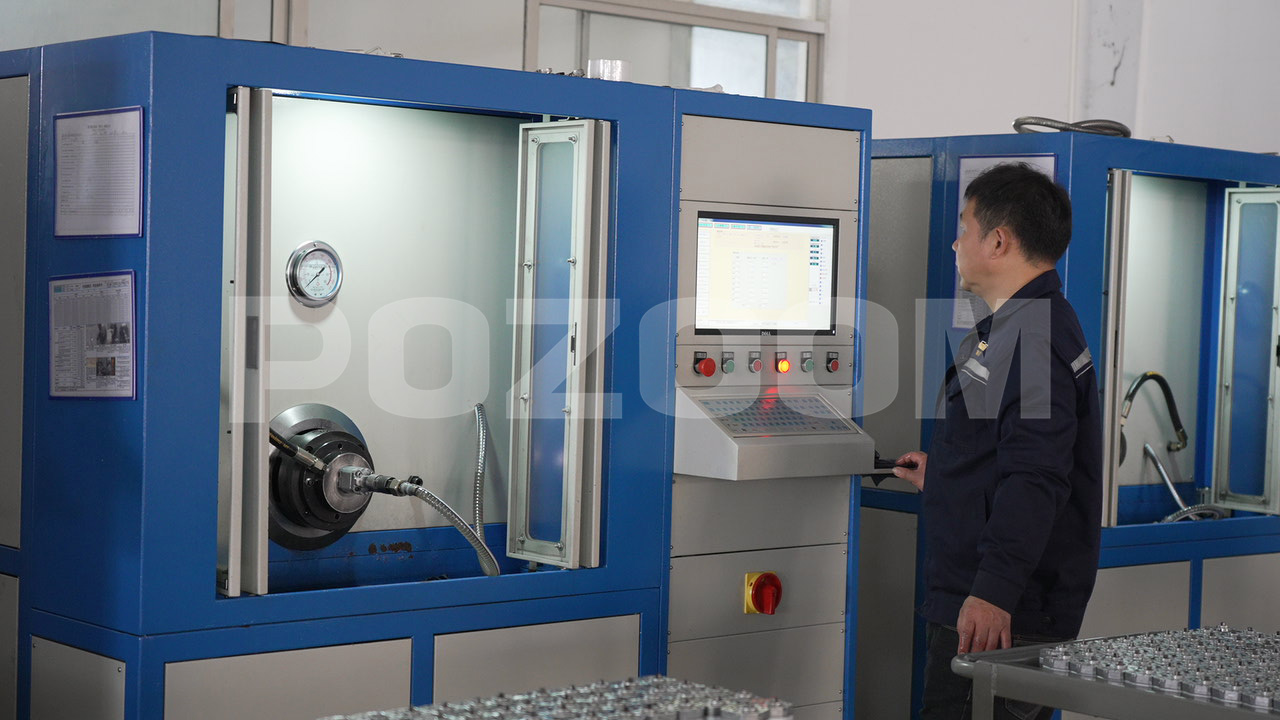
Integrated magnetostrictive sensors, potentiometers, or incremental encoders for precise position feedback in automated equipment applications.
Learn More →Power units—the combination of reservoir, pump, motor, and valving that generates hydraulic power—often require customization to fit within equipment constraints while delivering specific flow and pressure characteristics. Custom power units achieve 20-35% better energy efficiency compared to assembled standard components because optimization occurs at the system level rather than component level.
Noise reduction represents another customization driver. Standard power units often produce objectionable noise levels for indoor or noise-sensitive applications. Custom designs can incorporate acoustic enclosures, isolation mounts, optimized pump timing, and accumulator-assisted circuits that dramatically reduce operating noise.
Hydraulic manifolds consolidate multiple valves and flow paths into a single machined block, replacing the spaghetti of hoses and fittings found in older systems. Custom manifolds route fluid through shorter, smoother paths engineered specifically for each circuit's requirements—reducing energy consumption by 15-25% while improving thermal management.
From compact 1-HP units for small machinery to massive 1,400-HP installations. Vertical reservoirs, L-shaped designs, and IoT-enabled monitoring available.
Design Yours →
3D modeled and CFD-analyzed designs with optimized flow paths. Complex internal geometries for maximum flow efficiency and thermal management.
Get Specifications →Understanding how custom hydraulic projects progress helps buyers prepare for the engagement and manage expectations about timelines and information requirements. The custom hydraulic design build process follows established phases that ensure successful outcomes.
Custom projects begin with detailed consultation to understand the complete application context. Experienced hydraulic suppliers ask probing questions that go beyond basic specifications: What is the duty cycle—continuous operation or intermittent use? What environmental conditions exist? How does the hydraulic system integrate with other equipment systems?
Site visits often prove valuable for complex projects. Seeing the actual installation environment reveals constraints and requirements that might not emerge through remote discussions.
With requirements clearly defined, engineering work begins. System-level and application-specific projects require significant engineering effort that draws on deep custom hydraulics engineering expertise.
Simulation plays an increasing role in custom hydraulic design. Computational fluid dynamics (CFD) analysis predicts flow characteristics through complex manifold geometries. Dynamic simulation models entire hydraulic circuits, predicting system response to various operating scenarios before physical prototypes are built.
Responsible hydraulic suppliers never ship custom solutions without thorough testing. Cylinders are pressure tested to 1.5 times operating pressure to verify seal integrity and structural strength. Valves are flow-bench tested to confirm pressure-flow characteristics match design parameters.
For critical applications, customers often request factory acceptance testing where they witness testing firsthand. Video factory acceptance tests (VFAT) where suppliers document testing and share video evidence with remote customers have become increasingly common.
Certain industries have such specialized requirements that custom hydraulic solutions are the norm rather than the exception. These sectors drive innovation in customizable hydraulic solutions as suppliers develop new capabilities to meet evolving demands.
Heavy mobile equipment faces brutal operating conditions—vibration, shock loads, temperature extremes, and contamination from dust and debris. Standard commercial hydraulic components often fail prematurely in these environments. Custom solutions engineered specifically for construction and mining applications incorporate ruggedized designs, enhanced filtration, and materials selected for durability.
Bailey International serves the mining industry with custom valve systems that integrate load-sensing circuits to minimize energy waste during idle periods—a significant consideration when fuel costs are high and environmental regulations tighten. Custom manifold designs reduce the maze of hoses previously required, decreasing maintenance needs and improving reliability. Given that equipment downtime in remote mining locations can cost millions daily, the investment in custom hydraulics delivers rapid payback through improved uptime.
Underground mining presents additional challenges. Space constraints limit component sizes. Explosion-proof requirements mandate specific materials and designs. High ambient temperatures from rock formations stress seals and fluids. Custom fluid solutions for mining applications address these conditions with specially formulated hydraulic fluids that maintain performance across extreme temperature ranges while meeting fire-resistance requirements.
Modern agricultural equipment increasingly relies on hydraulics for functions ranging from steering to implement control. Space constraints on compact tractors, combined with the need for systems that function reliably in dusty, dirty conditions and temperature extremes from -20°F to 120°F, push many applications toward custom solutions.
Hydra-Tech's custom agricultural hydraulics address specific crop and equipment needs. A specialty harvester might require multiple independent hydraulic circuits operating at different pressures and flow rates, all powered from a single source and packaged within a constrained space. Custom design optimizes the entire system rather than forcing standard components to work together awkwardly.
Precision agriculture drives new customization requirements. GPS-guided systems demand hydraulic components with exceptional response accuracy for auto-steering applications. Variable-rate application equipment requires proportional valving that precisely meters product flow. These sophisticated control requirements push agricultural hydraulics toward custom-engineered solutions that integrate seamlessly with electronic management systems.
Weight sensitivity, extreme reliability requirements, and specialized operational conditions make aerospace applications prime candidates for custom hydraulics. York Precision Machining manufactures custom actuators with their proprietary Bear-Loc technology that automatically locks when hydraulic pressure is lost—essential for safety-critical aerospace applications.
Military applications add requirements for specific materials, testing protocols, and documentation standards. Custom Hydraulic & Machine has supplied the US Government for over 40 years with marine-rated hose fittings meeting MIL-I-45208A specifications and other military standards. These highly specialized components justify custom fabrication despite premium costs because standard commercial products cannot meet stringent military requirements.
Aerospace hydraulics must perform reliably across altitude changes affecting fluid viscosity and seal behavior. Temperature swings from ground operations through high-altitude flight stress every component. Vibration and shock loads during takeoff and landing exceed what ground-based equipment experiences. Each factor requires specific engineering attention that only custom design can provide.
The push toward Industry 4.0 and smart manufacturing drives demand for hydraulic systems that integrate seamlessly with electronic controls, provide real-time feedback, and optimize energy consumption. Standard catalog hydraulic components often lack the sensor integration and control interfaces required for modern automated systems.
IFP Automation specializes in custom hydraulics for manufacturing applications where standard catalog systems limit production capability or equipment performance. Custom solutions optimize for specific cycle time requirements, enable precise position control through integrated feedback sensors, and incorporate predictive maintenance capabilities through IoT connectivity. The initial investment premium is offset by improved throughput and reduced downtime.
Press automation exemplifies manufacturing customization needs. Metal forming presses require precise force and position control throughout the stroke. Custom hydraulic systems integrate servo-proportional valving, real-time pressure feedback, and sophisticated electronic controls that standard components cannot provide. The resulting precision improves part quality while reducing scrap rates.
Saltwater environments present severe corrosion challenges that standard hydraulic components cannot withstand. Marine applications require specialized materials, coatings, and seal compounds throughout the hydraulic system. Custom solutions for marine applications incorporate stainless steel construction, specialized platings, and seals formulated for saltwater exposure.
Offshore oil and gas operations add extreme pressure requirements for subsea equipment. Hydraulic systems operating at ocean depths must function reliably despite enormous external pressures and total inaccessibility for maintenance. These applications demand the highest levels of custom engineering with extensive qualification testing before deployment.
Theme park rides, flight simulators, and motion platforms rely on hydraulic systems for smooth, precise motion control. These applications require extremely low noise levels, precise position control, and absolute reliability for passenger safety. Standard industrial hydraulics cannot meet these demanding requirements.
Custom entertainment hydraulics incorporate servo-quality valving for smooth motion, specialized fluids for quiet operation, and redundant safety systems that ensure safe stopping under any failure condition. Control systems integrate with show programming and safety monitoring equipment through custom interfaces.
Understanding the cost structure of custom hydraulics helps buyers make informed decisions about when customization delivers value. The economics of customized hydraulic solutions often favor custom approaches despite higher initial investment.
Custom hydraulic solutions typically carry higher initial price tags than off-the-shelf alternatives. Component modifications add 15-30% premiums, system-level integration pushes costs 40-80% higher, and fully engineered custom systems can cost 100-200% more than assembled standard parts.
However, total cost of ownership (TCO) analysis often favors custom solutions for demanding applications:
Custom cylinders designed precisely for applications reduce maintenance costs by 35-50% through longer service life and fewer failures. Custom power units optimized for specific duty cycles achieve 20-35% energy savings compared to oversized generic units—savings that can recoup the initial investment premium within 2-3 years of operation.
Energy efficiency improvements compound over equipment lifetime. A custom power unit saving 5 kilowatts compared to an oversized standard unit translates to significant annual electricity savings. Over a 15-year equipment life, these savings can exceed the original equipment cost multiple times. Environmental benefits from reduced energy consumption increasingly factor into purchasing decisions as companies pursue sustainability goals.
Downtime costs particularly favor custom solutions in critical applications. Mining equipment downtime routinely costs $5,000-15,000 per hour in lost production. If a $5,000 custom hydraulic manifold reduces annual downtime by just 10 hours compared to a $2,000 generic solution, the net benefit exceeds $50,000 annually. This calculation explains why reliability-critical industries readily invest in custom hydraulics.
Standard hydraulic components typically ship within days or weeks. Custom solutions require longer lead times that vary by complexity:
Component modifications: 2-4 weeks additional
System integration: 6-12 weeks
Fully engineered custom systems: 12-24 weeks or more
For companies with urgent equipment needs, these extended timelines can be problematic. Some suppliers address this through rapid customization programs. Bailey International's MVP (Motors, Valves, Pumps) Program configures custom components to specifications and delivers in days rather than weeks by maintaining inventory of base components that can be quickly modified.
Strategic buyers factor custom hydraulic lead times into equipment development schedules. When new equipment designs are in development, engaging hydraulic suppliers early in the design process allows custom component development to proceed in parallel with other engineering work, preventing schedule delays. Early engagement also enables hydraulic engineers to influence equipment design in ways that simplify hydraulic system requirements.
Production planning for ongoing equipment manufacture requires coordination with custom hydraulic suppliers. Blanket orders with scheduled releases allow suppliers to plan production efficiently while ensuring components arrive when needed. This approach often yields better pricing than spot orders while maintaining delivery reliability.
Buyers sometimes piece together standard components to avoid custom solution costs, only to discover hidden expenses that erase apparent savings. Adapting standard components often requires additional fittings, brackets, and hoses that add complexity, create more potential leak points, and increase assembly time. The resulting system may be bulkier, less efficient, and harder to maintain than a custom solution would have been.
Compatibility issues between components from different manufacturers can require expensive troubleshooting. When problems occur, determining which component is at fault becomes difficult when dealing with multiple suppliers. Custom integrated systems from a single source clarify responsibility and streamline support.
Field modifications to force-fit standard components sometimes compromise safety or reliability. Improper mounting might subject cylinders to side loads they weren't designed to handle, dramatically shortening service life. Undersized components might work initially but fail prematurely under sustained operation. The costs of field failures—including warranty claims, service calls, and reputation damage—often exceed the savings from avoiding custom solutions.
Inventory complexity adds hidden costs when using multiple standard components. Stocking spare parts for numerous different component types ties up capital and requires warehouse space. Custom standardization across equipment fleets simplifies spare parts inventory while ensuring optimal component specification for each application.
Not every application justifies custom hydraulics. Understanding decision factors helps buyers choose appropriately between standard catalog products and custom components for hydraulic industry needs.
When operating requirements fall outside standard component specifications, customization becomes necessary. A manufacturer needing 2,800 PSI operating pressure faces a gap—standard components typically come in 2,000 PSI or 3,000 PSI variants. Using 3,000 PSI components is wasteful and expensive; downrating 2,000 PSI components risks premature failure. Custom design targets the exact requirement.
Extreme environmental conditions often necessitate custom solutions. Equipment operating in Arctic conditions below -40°F, or in hot desert environments exceeding 130°F, requires seals and fluids beyond standard temperature ratings. Corrosive atmospheres, explosive environments, and underwater applications each impose specialized requirements that standard off-the-shelf components don't address.
Precision requirements drive customization in many applications. Standard hydraulic cylinders maintain position within perhaps 0.1 inches under load. Applications requiring 0.001-inch positioning accuracy need custom cylinders with integrated feedback, precision machining, and specialized valving that catalog products cannot provide.
Cycle rate requirements sometimes exceed standard component capabilities. High-speed automation may require valve response times faster than general-purpose valves achieve. Custom valve specifications and circuit designs deliver the dynamic response these applications demand.
Mobile equipment and compact machinery often face severe space limitations that standard components cannot accommodate. A customer might need a hydraulic cylinder generating 10 tons of force but fitting within a 16-inch envelope—a requirement falling between standard catalog sizes. Custom design allows engineers to optimize bore diameter, rod size, and stroke length precisely for the available space while meeting force requirements.
Complex machinery sometimes requires hydraulic circuits with unique routing to avoid interference with other systems. Standard rigid pipe assembl html
Not every application justifies custom hydraulics. Understanding decision factors helps buyers choose appropriately between standard catalog products and custom components for hydraulic industry needs.
When operating requirements fall outside standard component specifications, customization becomes necessary. Extreme environmental conditions often necessitate custom solutions—equipment operating in Arctic conditions below -40°F, or in hot desert environments exceeding 130°F, requires seals and fluids beyond standard temperature ratings.
Mobile equipment and compact machinery often face severe space limitations that standard components cannot accommodate. Custom design allows engineers to optimize bore diameter, rod size, and stroke length precisely for the available space while meeting force requirements.
When hydraulic systems must integrate tightly with proprietary equipment designs, custom solutions often prove necessary. Electronic control integration presents particular challenges—standard hydraulic valves may lack appropriate sensor ports, or their response characteristics might not match control system requirements.
Choosing an appropriate partner for custom hydraulic work significantly impacts project success. Suppliers with strong custom hydraulic engineering capabilities deliver better results than those attempting customization beyond their core competencies.
The supplier's engineering depth matters tremendously for complex custom work. Ask potential suppliers about their design capabilities: Do they use current CAD software? Can they perform finite element analysis for structural validation? Do they have experience with your specific industry's applications?
Custom fabrication requires appropriate manufacturing equipment and quality control systems. ISO 9001 certification signals established quality management systems—warranty rates below 0.5% separate leaders from average suppliers.
The relationship with a custom hydraulic supplier shouldn't end at delivery. Look for companies offering ongoing technical support, field service capabilities, and readily available spare parts.
Cost premiums vary by customization level. Simple modifications to standard components add 15-30%, system-level integration increases costs by 40-80%, and fully engineered custom systems may cost 100-200% more than assembled standard parts. However, total cost of ownership often favors custom solutions through reduced maintenance, better energy efficiency, and less downtime.
Lead times depend on complexity. Component-level modifications add 2-4 weeks to standard delivery times. System-level integration projects require 6-12 weeks. Fully engineered custom systems need 12-24 weeks or more, especially for first-article designs requiring prototype testing and refinement.
Most custom hydraulic suppliers offer modification services for existing equipment. This might involve changing mounting styles, adding ports, or adapting dimensions. Welded hydraulic cylinders can often be re-barreled or have mounting changes welded on. Manifold blocks can be re-machined to add ports or valve positions.
Custom hydraulic systems don't inherently require more maintenance than standard systems, and often require less if properly designed for the application. Custom systems should include clear documentation specifying service intervals, proper fluids, and recommended spare parts.
Essential information includes: operating pressure and flow requirements, duty cycle description, environmental conditions, space constraints with dimensional limits, mounting interface requirements, control integration needs, applicable industry standards, expected production volumes, and timeline requirements.
Intellectual property protection requires clear contractual arrangements. Before sharing detailed requirements, execute non-disclosure agreements covering all technical information exchanged. Contract terms should specify design ownership—whether the supplier, customer, or both parties retain rights to designs developed during the project.
Our engineering team is ready to help you design the perfect solution for your application.
Start Your Custom Project

