
Tube-mounted installation is the earliest component connection form to appear in the field of hydraulic technology, with its history tracing back to the very birth of hydraulic technology. In those days, engineers faced the challenge of how to combine individual hydraulic components into a system capable of working in coordination, and tube connections became the only viable choice at the time due to their intuitive and flexible characteristics. To this day, despite the emergence of various new installation methods, tube-mounted installation still maintains an irreplaceable position in specific applications.
From a structural perspective, the tube-mounted valve stands out among all types of installation connection forms: it is the only truly independent and complete valve body form. Each tube-mounted valve possesses complete working capability, with both its inlet and outlet ports machined with standard internal threads, allowing various specifications of pipe fittings to be directly threaded in. Through hard pipes or flexible hoses, tube-mounted valves can achieve series or parallel connections with pumps, cylinders, motors, and other control valves. This “plug and play” characteristic allowed it to occupy an absolutely dominant position in early hydraulic system design. Depending on functional requirements, tube-mounted valves can have two, three, or even more ports to meet different circuit control needs.
However, as the degree of industrial automation has continuously increased, the hydraulic functions integrated on a single piece of equipment have become increasingly complex, often requiring the configuration of a dozen or even dozens of various valves in a single system. Under these circumstances, the inherent defects of tube-mounted installation have begun to be fully exposed and have become increasingly difficult to ignore.
First is the problem of extremely low space utilization. Since sufficient space must be reserved between each valve body for laying connecting pipelines, and the pipelines themselves require a certain bending radius to complete their routing, the actual floor space of the entire system is often several times the volume of the valve bodies themselves. For mobile machinery or marine equipment where installation space is extremely precious, this is undoubtedly a serious constraining factor.
Second is the issue of installation and maintenance convenience. During initial assembly, technicians need to complete the cutting, flaring, and assembly of pipelines one by one, which is quite tedious work. Once the system is put into operation and a valve fails and needs replacement, the situation becomes even more troublesome—because the pipelines are intertwined with each other, replacing one valve often means having to first remove multiple surrounding pipelines and fittings, with one move affecting the whole situation.
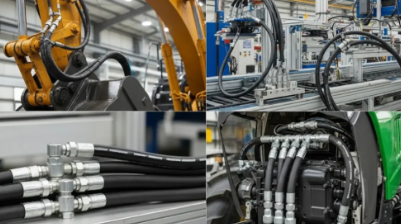
The third problem is equally significant: the reliability of sealing is difficult to guarantee over the long term. The taper face seals or O-ring seals of pipe fittings are extremely prone to wear and deformation after repeated disassembly and reassembly. Even if new sealing elements are replaced, it is very difficult to restore the sealing effectiveness to its initial installation state. Over time, oil seepage and dripping at various points throughout the system become almost unavoidable, both polluting the environment and causing oil loss.
Here we can cite a typical engineering example: the hydraulic system of a certain model of engineering truck was built entirely using tube-mounted valves. Due to the very limited installation area available on the chassis, the designers had no choice but to arrange the valves and pipelines in three stacked layers. As a result, the valves on the bottom layer were almost completely obscured by the pipelines above. Daily inspection was already difficult, and replacement was an even more time-consuming and labor-intensive major undertaking. Workers often needed to spend several hours removing layer after layer of pipelines before they could access the target valve, and the high maintenance costs can easily be imagined.


