
Hydraulic actuators have become indispensable components in automation systems, but choosing the right type demands more than basic specifications. The global actuators market reached $47.2 billion in 2024 and is expected to grow to $80.8 billion by 2033, with hydraulic actuators claiming 36.79% of the market share Global Actuators Market Size, Demand, Share | Report 2033 (Source: imarcgroup.com, 2024). This growth reflects their continued dominance in high-force automation applications across manufacturing, mining, and aerospace sectors.
The question isn’t whether hydraulics belong in automation—it’s which configurations deliver optimal performance for specific operational demands. Modern hydraulic actuators now integrate smart sensors, IoT connectivity, and hybrid designs that challenge traditional assumptions about fluid power systems.
Force capacity remains the primary differentiator when selecting hydraulic actuators for automation. Hydraulic cylinders at 2200 psi can achieve approximately 15,000 lbf with a 3-inch bore and 43,000 lbf with a 5-inch bore Hydraulic linear actuator advantages and disadvantages (Source: tolomatic.com, 2022). This power density makes hydraulics the default choice for heavy-duty applications that electric actuators struggle to match.
Linear hydraulic actuators excel in applications requiring straight-line force transmission. Assembly lines use them for pressing, stamping, and material positioning where loads exceed 10,000 pounds. In automotive manufacturing, hydraulic-driven robotic actuators handle heavy components such as windshields and car doors during installation processes 35+ Actuator Applications and Their Functions in Automation Systems (Source: bawalaksana.co, 2024).
Rotary hydraulic actuators convert fluid pressure into angular motion. Vane-style rotary actuators operating at 3,000 PSI can deliver up to 741,000 inch-pounds of torque in compact packages Superior Rotary Actuators | Micromatic LLC (Source: micromaticllc.com, 2021). These specifications make rotary hydraulics ideal for valve automation, robotic joint articulation, and material handling equipment requiring precise rotational control.
Applications requiring forces above 50,000 pounds typically necessitate hydraulic solutions. While electric actuators have evolved to handle up to 50,000 pounds of force, applications beyond this threshold remain dominated by hydraulic systems due to their superior power density Extreme-force electric actuators up to 50,000 pounds of force can now take on hydraulics (Source: tolomatic.com, 2022). Heavy machinery in mining, oil and gas extraction, and metal forming operations rely on hydraulic actuators capable of exerting forces measured in hundreds of thousands of pounds.
Consider the total system architecture when evaluating force requirements. A 30,000-pound application might favor electric actuation for its control capabilities, while a 60,000-pound scenario demands hydraulics despite higher infrastructure costs.
Electro-hydraulic actuators (EHAs) represent a hybrid solution combining hydraulic power with electrical control. The electrohydraulic actuator market was valued at $334.2 million in 2023 and is projected to reach $471.4 million by 2033, growing at a 3.5% CAGR Electrohydraulic Actuator Market Size, Share | CAGR of 3.5% (Source: market.us, 2024).
Traditional hydraulic systems require centralized power units, extensive plumbing, and dedicated floor space. Self-contained electro-hydraulic actuators integrate the cylinder, pump, manifold, and servo motor into a single sealed package, eliminating hoses and leak points FAQs for SMART Electro-Hydraulic Actuators & Servo … (Source: kyntronics.com, 2024). This configuration reduces installation complexity and maintenance requirements while retaining hydraulic power advantages.
Manufacturing facilities adopting EHAs report reduced downtime from fluid leaks and simplified commissioning processes. The sealed design also prevents contamination—a critical advantage in food processing and pharmaceutical automation where hydraulic fluid leaks pose regulatory risks.
EHAs leverage servo motor control to achieve positioning accuracy previously impossible with traditional hydraulic systems. Volvo CE’s IMVT technology using electro-hydraulic valves demonstrated a 20% boost in productivity through reduced pressure losses and optimized valve control based on load conditions FEATURE: The future of electro-hydraulics | Industrial Vehicle Technology International (Source: ivtinternational.com, 2024).
The digital control interface enables these actuators to execute complex motion profiles. Speed, position, and force can be programmed and adjusted in real-time without manual valve adjustments. This programmability makes EHAs suitable for automated assembly stations requiring frequent changeovers between product variants.
The hydraulic versus electric debate intensifies as electric actuator technology advances. Each technology occupies distinct niches within automation ecosystems.
Hydraulic actuators continue dominating applications where their inherent characteristics align with operational requirements:
Shock Load Tolerance: Hydraulic actuators demonstrate superior tolerance for shock loads and side loading, making them more durable in demanding environments compared to electric actuators with complex mechanical components Hydraulic vs Electric Actuators: Pros & Cons | Kyntronics (Source: kyntronics.com, 2025).
Constant Force Holding: The incompressibility of hydraulic fluid allows actuators to hold constant force without the pump continuously supplying pressure Hydraulic vs. Electric Linear Actuator: Which is Best? (Source: cmco.com). This characteristic benefits applications like clamping fixtures and press operations requiring sustained force over extended periods.
Extreme Temperature Operation: Hydraulic systems function reliably in temperature ranges that challenge electric actuators. Heavy equipment operating in arctic conditions or desert environments benefits from hydraulic actuation’s thermal resilience.
Electric actuators have captured market share in precision-critical applications. Electric actuators provide instantaneous force generation, unlike hydraulic cylinders that must wait for pressure buildup, and their servo controllers automatically regulate current for on-demand power usage Why Electric Actuators are Replacing Hydraulics | Power & Motion (Source: powermotiontech.com).
Energy Efficiency: Electric actuators consume power only during motion, while hydraulic power units maintain system pressure continuously. In automation cells with intermittent actuation cycles, this difference translates to substantial energy savings.
Maintenance Simplification: Electric actuation requires very little to no maintenance over a machine’s life, with power elements typically greased for life, compared to hydraulic systems requiring regular oil changes and seal replacements Why Electric Actuators are Replacing Hydraulics | Power & Motion (Source: powermotiontech.com).
Data Integration: Electric actuators provide native position, speed, and force feedback through existing servo drive interfaces. Achieving equivalent data visibility in hydraulic systems requires additional sensors and integration hardware.
The optimal choice depends on application-specific factors:
Digital transformation is reshaping hydraulic actuation through IoT connectivity and predictive analytics. Integrating IoT into hydraulic systems enables manufacturers to monitor operational data, energy consumption, and functional status in real-time from any location The Integration of IoT is Vital for Hydraulics | Power & Motion (Source: powermotiontech.com).
Modern hydraulic actuators accommodate embedded sensors monitoring pressure, temperature, position, and fluid condition. Eaton’s LifeSense intelligent monitoring system for hydraulic hoses continuously measures condition to predict failures, preventing thousands of dollars in daily losses for hydroelectric power plants How Is the IoT Revolutionizing Hydraulics and Pneumatics? | ManufacturingTomorrow (Source: manufacturingtomorrow.com, 2021).
These monitoring capabilities transform maintenance from reactive to predictive. Automation systems can schedule actuator servicing based on actual wear patterns rather than arbitrary time intervals, maximizing uptime while minimizing maintenance costs.
Promoting low-power Bluetooth connectivity for remote valve-controller configuration allows valves to be installed in optimal operational locations rather than positions chosen for accessibility, with smartphones serving as complete service tools The Impact of IoT on Fluid-Power Systems | Machine Design (Source: machinedesign.com).
This wireless approach benefits automated systems with actuators in challenging locations—overhead gantries, confined spaces, or rotating assemblies. Configuration changes and diagnostics occur remotely without physical access to the actuator.
Bosch Rexroth demonstrated how pre-programmed controllers for hydraulics facilitate transitions from path control to force control, enabling systems to function independently and adapt to changing process parameters through Industry 4.0 integration The IoT Intends to Revolutionize Hydraulics and Pneumatics | Power & Motion (Source: powermotiontech.com, 2015).
Cloud connectivity enables fleet-wide optimization. A manufacturer operating multiple production lines can analyze performance data across all hydraulic actuators, identifying efficiency opportunities and standardizing best practices. Software updates can be deployed remotely to improve actuator performance without disrupting production.
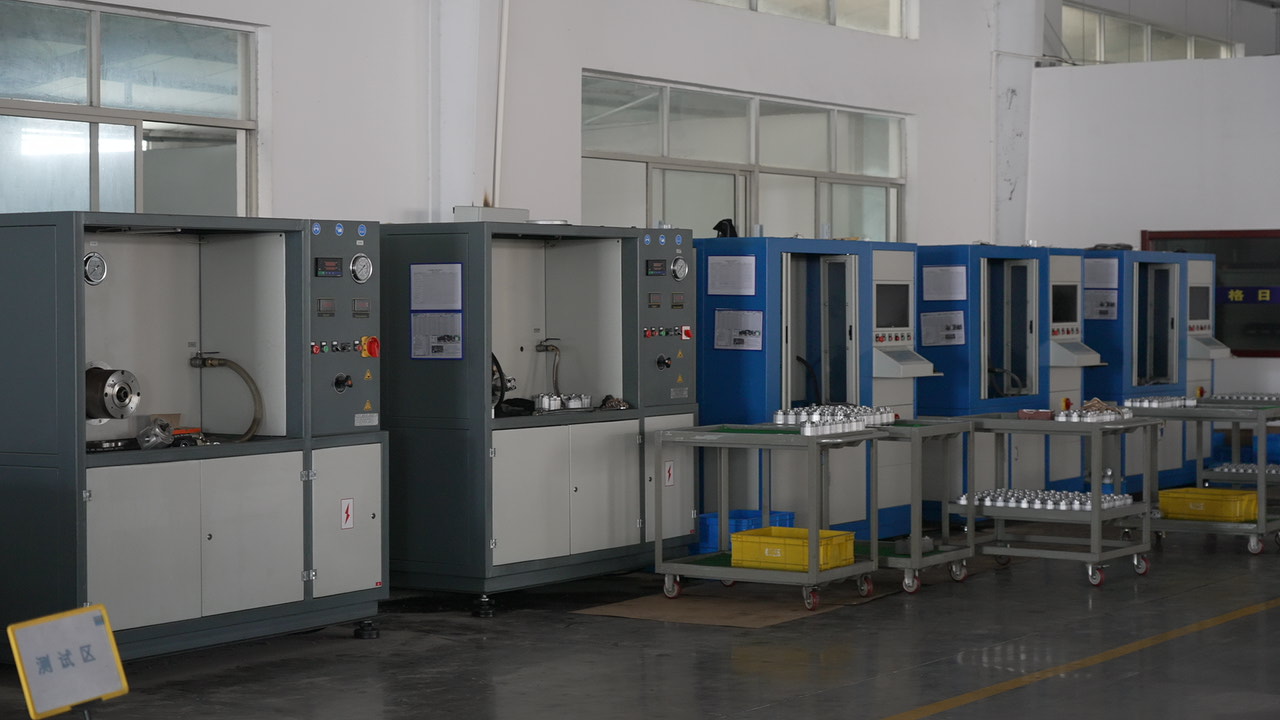
Different automation scenarios demand tailored hydraulic actuator specifications.
Press applications in automotive and heavy manufacturing benefit from electric actuators that adjust speeds and forces throughout motion profiles, providing more precise control than constant-force hydraulic actuators for operations like punching, piercing, and stamping Extreme-force electric actuators up to 50,000 pounds of force can now take on hydraulics (Source: tolomatic.com, 2022).
However, for forming operations exceeding 100,000 pounds of force, hydraulic presses remain standard. The key is matching actuator response time to press cycle requirements. Single-stroke presses tolerate slower hydraulic response times, while high-speed progressive dies benefit from faster-responding EHA configurations.
Automated warehouses increasingly deploy hydraulic actuators in high-capacity lift systems. Forklifts, scissor lifts, and dock levelers rely on hydraulic actuation for reliable operation under variable loads. The hydraulic and electric linear actuators market for material handling applications was valued at $54.3 billion in 2022 and is projected to reach $118.2 billion by 2032 Hydraulic And Electric Linear Actuators Market Growth & Trend 2032 (Source: alliedmarketresearch.com).
Robotic material handling systems use hydraulic grippers when handling fragile products requiring gentle yet firm control. The inherent damping in hydraulic systems prevents the sudden movements that damage delicate items.
Servo-hydraulic actuators are employed in aerospace flight control systems and weapon systems, where their ability to deliver accurate and repeatable movements makes them ideal for high-stakes applications The Ultimate Guide to Servo-Hydraulic Actuators: Applications, Benefits, and Considerations – Hydraulc & Engineering Instruments (Source: heicodynamics.wordpress.com, 2024).
Aircraft landing gear systems demonstrate hydraulic actuation’s reliability under extreme conditions. These actuators must function flawlessly despite temperature variations from -65°F at altitude to 150°F on desert runways, while withstanding severe shock loads during landing.
Food and beverage industry environments require actuators designed with minimal gaps that can endure exposure to corrosive substances and disinfectant solutions during mandatory Washdown Protocol cleaning 35+ Actuator Applications and Their Functions in Automation Systems (Source: bawalaksana.co, 2024).
Stainless steel hydraulic actuators with food-grade seals meet these requirements. Electro-hydraulic configurations offer advantages here by eliminating external hydraulic lines vulnerable to contamination during cleaning cycles.
Initial actuator cost represents only one component of long-term expenses.
Hydraulic systems require power units, distribution manifolds, filtration equipment, and cooling systems. Servo drives for electric actuators occupy a fraction of the space required by hydraulic power units, significantly reducing overall machine footprint Comparing Electric Rod Actuators and Hydraulic Cylinders | Machine Design (Source: machinedesign.com).
Facility planning must account for these spatial demands. Retrofitting automation into existing buildings may find hydraulic power unit placement challenging, favoring electric or self-contained EHA solutions.
Hydraulic actuators require frequent maintenance including seal replacements, oil filter changes, and periodic oil replacement, as contaminated or degraded oil negatively impacts system operation Hydraulic linear actuator advantages and disadvantages (Source: tolomatic.com, 2022).
Calculate maintenance labor hours and consumable costs over a typical 10-year equipment lifecycle. Electric actuators’ lower maintenance requirements often offset their higher initial purchase price within 3-5 years for moderate-duty applications.
Hydraulic power units consume energy continuously to maintain system pressure. Electric actuator servo controllers regulate current automatically, using power on-demand, while hydraulic power units must continuously maintain system pressure which creates energy inefficiency Why Electric Actuators are Replacing Hydraulics | Power & Motion (Source: powermotiontech.com, 2025).
For intermittent-duty automation cells, this difference compounds significantly. A hydraulic system cycling 20% of the time still consumes 60-80% of continuous power, while electric actuators consume power only during the 20% active period.
The hydraulic-electric dichotomy is blurring as hybrid technologies emerge.
Dual-mode actuators operate at high speed with low load, then switch to high force at lower speed, ideal for applications like metal forming presses where most stroke length involves low-load rapid approach followed by short high-force working strokes FAQs for SMART Electro-Hydraulic Actuators & Servo … (Source: kyntronics.com, 2024).
These systems optimize energy consumption by matching actuator characteristics to actual load requirements throughout the motion cycle. Traditional single-mode hydraulic cylinders sized for peak force waste energy during low-force portions of the cycle.
Servo power units (SPUs) provide hydraulic power without centralized infrastructure. SPUs integrate a servo motor, pump, and valving in a sealed system that connects directly to external cylinders through quick-connect couplings, typically located near the actuator to minimize losses FAQs for SMART Electro-Hydraulic Actuators & Servo … (Source: kyntronics.com, 2024).
This architecture suits modular automation systems where individual work cells require hydraulic actuation but centralizing power units is impractical. Each cell gains hydraulic power without extensive plumbing infrastructure.
Applications requiring continuous forces exceeding 50,000 pounds typically necessitate hydraulic solutions, though this threshold continues rising as electric actuator technology advances. The decision also factors in duty cycle, space constraints, and existing infrastructure.
Yes, particularly electro-hydraulic configurations with servo motor control. Modern EHAs achieve positioning accuracy within micrometers while maintaining hydraulic systems’ high force capabilities. Traditional hydraulics with proportional valves also deliver sufficient precision for many industrial applications.
Electric actuators generally require minimal maintenance—primarily lubrication of mechanical components—over their lifecycle. Hydraulic systems demand regular oil changes, filter replacements, seal maintenance, and leak monitoring. However, hydraulic actuators tolerate shock loads and harsh environments better than electric alternatives.
Electro-hydraulic actuators combine hydraulic power density with electrical control precision. Self-contained designs eliminate external plumbing while maintaining force capabilities. They offer energy efficiency improvements through on-demand operation and simplified integration into digitally controlled automation systems.
IoT-enabled hydraulic actuators provide real-time performance monitoring, predictive maintenance capabilities, and remote diagnostics. These features reduce downtime and enable data-driven optimization. When specifying actuators for new projects, consider connectivity options, embedded sensors, and compatibility with existing enterprise systems.
Electric actuators eliminate hydraulic fluid leak risks, making them preferable for environmentally sensitive applications. However, electro-hydraulic systems with sealed designs also prevent environmental contamination. Biodegradable hydraulic fluids further reduce environmental impact in applications where hydraulics’ force capabilities remain necessary.
Selecting hydraulic actuators for automation demands systematic evaluation of force requirements, duty cycles, precision needs, and total ownership costs. While electric actuators continue gaining market share in moderate-force applications, hydraulics remain essential for heavy-duty automation where their power density and shock load tolerance provide irreplaceable advantages.
Electro-hydraulic hybrid designs increasingly offer compelling middle-ground solutions, delivering hydraulic force capabilities with electric control precision and energy efficiency. As these technologies mature and IoT integration becomes standard, the traditional boundaries between hydraulic and electric actuation will continue blurring.
Success in automation actuator selection requires looking beyond initial specifications to consider infrastructure requirements, maintenance demands, energy consumption, and digital integration capabilities. The “right” actuator maximizes productivity while minimizing total lifecycle costs within your specific operational context.


