
If you only need the direct answer, here it is: Rexroth piston pump types matter because they are built for different hydraulic jobs, not just different catalog positions. An A10VSO is often the sensible starting point for open-circuit variable-displacement work. An A4VSO moves the discussion toward heavier duty and higher pressure in open-circuit systems. An A10VG belongs in a closed-circuit hydrostatic conversation, where loop behavior and charge flow matter as much as pump displacement. And an A2FO still deserves respect when a machine needs fixed-displacement bent-axis simplicity instead of a more complicated control strategy. The wrong choice does not usually look wrong on day one. It shows up later in heat, response, maintenance, and downtime.
That is also why this topic should not be treated like a model-number glossary. At POZOOM, the question comes up from a parts-and-service angle just as often as it does from a system-design angle. The current catalog spans more than 7,000 spare parts and over 1,800 pump, valve, and motor specifications, so the issue is rarely “Which Rexroth family sounds more advanced?” The better question is which family fits the circuit, works with the control philosophy, and can still be supported quickly when a machine is down.
Why buyers and service teams keep getting this wrong
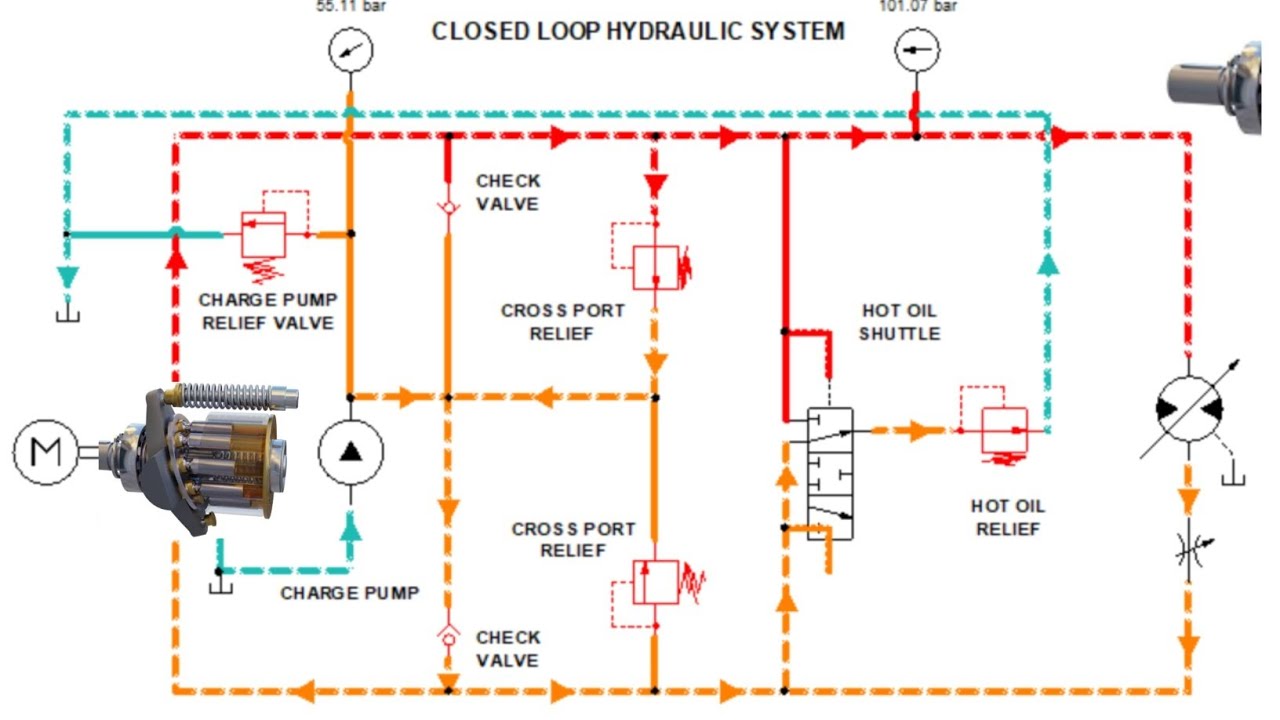
A lot of online content collapses everything into one oversized bucket called “Rexroth hydraulic pumps.” That is where confusion starts. In real selection work, the first split is not brand. It is circuit architecture. If the machine is open circuit, the pump is supplying flow from tank and sending return oil back to tank. If the machine is closed circuit, the pump and motor form a loop, and charge flow becomes part of the operating logic. POZOOM’s own explanation of open and closed hydraulic systems makes that distinction clearly: a closed-loop arrangement depends on replenishment and cooling support rather than acting like a standard tank-return circuit.
Then there is displacement logic. A variable-displacement pump solves one class of problems. A fixed-displacement pump solves another. Treating them as interchangeable just because both are Rexroth axial piston products is the kind of mistake that makes a machine look acceptable on a spec sheet and expensive in the field.
The third blind spot is supportability. A pump family is not only a performance choice. It is also a service choice. That sounds obvious once you have lived through a failure, but buyers often realize it too late.
A10VSO: the open-circuit baseline most teams actually start with
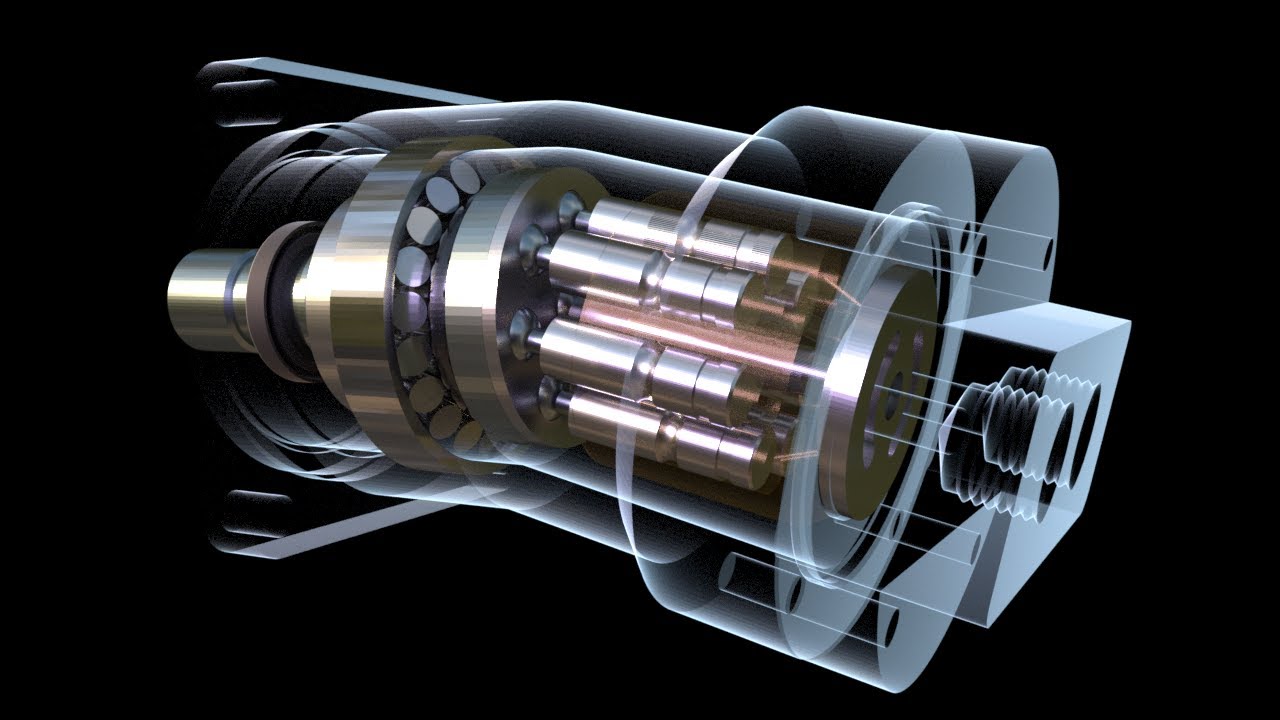
If there is one Rexroth piston pump family that keeps returning to the center of the conversation, it is A10VSO. Not because it is the most exotic option. Quite the opposite. It matters because it sits in a practical middle ground that many OEMs, repair shops, and hydraulic buyers know how to work with. The family is widely recognized as an open-circuit swash-plate axial piston variable pump, and that basic identity already tells you why it is so commonly shortlisted.
There is another reason it remains relevant: the family fits the kind of machine that needs flexible flow without turning the whole hydraulic package into a specialized engineering exercise. If the application is open circuit, load conditions are real but not unusually punishing, and the owner cares about long-term maintainability, A10VSO often looks like the pump family that makes the fewest bad compromises.
From the support side, that matters. Hydraulic88 already carries Rexroth A10VSO-related spare parts in its catalog, which says something useful even before you get into performance theory. A pump family that is easier to support over time usually becomes easier to justify at the original selection stage too.
A4VSO: when the open-circuit discussion gets more serious
Not every open-circuit machine should stop at A10VSO. Some applications run harder, see higher sustained demand, or leave less room for thermal and pressure complacency. That is where A4VSO starts to matter. This is not the “premium version” of the same idea so much as a different answer to a tougher operating question.
In practical terms, A4VSO earns its place when the machine needs more pressure headroom and a pump family that is comfortable living in a harsher operating envelope. That distinction is easy to flatten into vague phrases like “better performance,” but the real point is more useful than that. You choose a family like A4VSO because some machines punish marginal selection decisions. They may start, run, and even pass a light test cycle with a less suitable pump. Over time, though, the penalties show up through temperature, stability, efficiency, or service burden.
And this is where technical discipline matters. A4VSO is a pump family. Control packages built around proportional or electro-hydraulic behavior are another layer of the system. Good writing keeps those categories separate. Weak writing blurs them and leaves readers with model names but no real selection logic.
A10VG: this is where “pump selection” becomes drive-system thinking
The moment the machine is built around a closed loop, the conversation changes. You are no longer comparing pumps as if they were just alternate pressure sources. You are choosing a component that shapes the behavior of a hydrostatic drive. That is why A10VG matters.
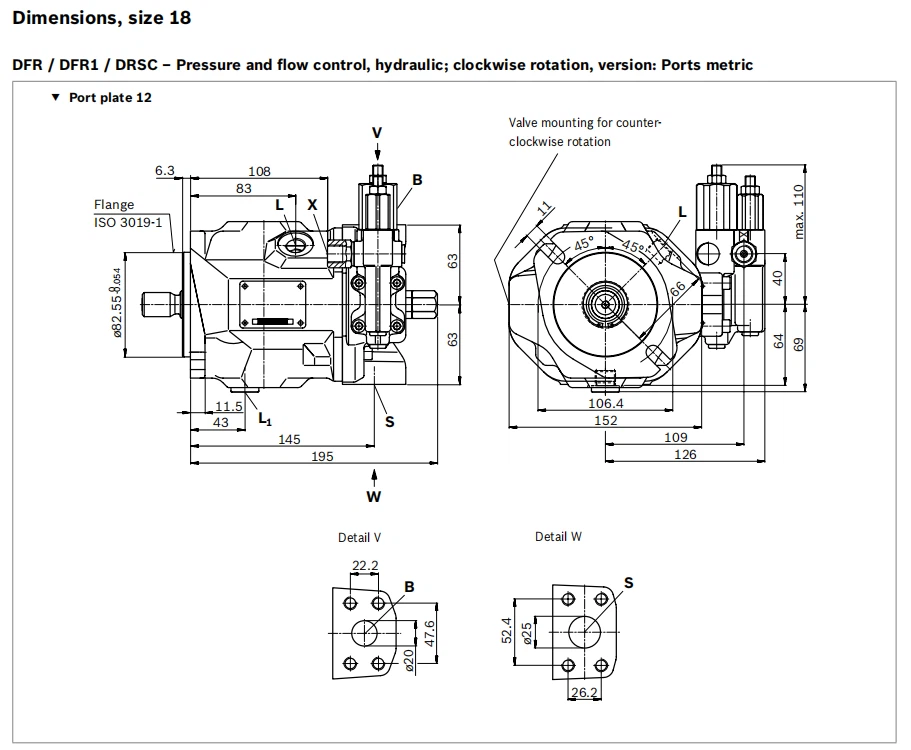
POOCCA’s A10VG product page is useful here because it frames the family the right way: a Series 10 swash-plate axial piston variable pump for closed-circuit hydrostatic transmission, offered in sizes 18, 28, 45, and 63, with nominal pressure at 300 bar and maximum pressure at 400 bar. That description sounds simple, but it does more than list specs. It anchors the pump in the logic of a closed-circuit transmission instead of treating it like a generic hydraulic pump.
Hydraulic88’s current support catalog reinforces the same point from another direction. The site already lists an A10VG28 charge pump with a specific part number, which is a useful reminder that closed-loop service work is not only about replacing complete pumps. Charge-pump continuity matters. Replenishment and loop stability matter. If your machine architecture depends on that closed-loop behavior, the decision is not just “Do I want an axial piston pump?” It is “Do I need a pump family built for this kind of drive logic, and can I support it properly when the machine is in service?”
That is also why people mix up hydrostatic terminology so often. POZOOM’s explainer on hydrostatic hydraulic pressure is about pressure in the fluid sense, but in equipment discussions the term “hydrostatic” often points readers toward closed-loop drive architecture. In real buying conversations, you need to know which meaning is being used, because the selection consequences are very different.
A2FO: fixed displacement still solves real problems
It is easy for modern hydraulic content to make variable displacement sound like the only sophisticated answer. That is not how good engineering works. A2FO still matters because fixed-displacement bent-axis pumps remain a strong fit in applications where mechanical directness, durability, and predictable behavior are more valuable than continuous pump-side modulation.
Some systems simply do not need the pump itself to do all the fine adjustment work. They may rely on circuit design, valve logic, or machine duty characteristics that make a fixed-displacement pump the cleaner answer. When that is the case, choosing a variable family because it looks more advanced is not a sign of technical maturity. It is often the opposite.
What should drive the decision first
Before anyone argues about model preference, ask these questions in this order:
- What is the circuit architecture? Open circuit points you toward families like A10VSO or A4VSO. Closed circuit changes the shortlist immediately.
- Does the application truly need variable displacement? If not, a fixed-displacement family may be the more durable and economical answer.
- How hard is the duty cycle really? Light test conditions and sustained working conditions are not the same thing.
- How much does the control strategy matter? Pump selection should match the machine’s control philosophy, not fight it. POZOOM’s guide to hydraulic controls is useful here because it frames control as a system issue, not a bolt-on accessory.
- What happens after failure? Parts continuity, diagnosis, and repair access are not “later problems.” They are part of the original selection decision.
Why supportability belongs in a technical article
This is the section most AI-written blog posts miss. They explain the pump, compare the pump, summarize the pump, and then stop before the part that matters in real ownership. Serviceability changes the economics of pump choice.
POOCCA is unusually useful as a source here because its service pages do not only talk about selling products. They talk about inspection, repair, and replacement of hydraulic pumps and motors. They explicitly mention worn plungers, cylinders, valve plates, and bearings. They mention fault diagnosis, strict testing after repair, and online technical support for installation and troubleshooting. That is not abstract branding language. It is the vocabulary of companies that expect equipment to come back with real failure modes attached to it.
Seen through that lens, pump-family selection stops being a catalog exercise. A technically impressive family that becomes harder to diagnose, slower to support, or more painful to keep in the field may carry a higher lifetime cost than a less glamorous option with better support continuity.
Hydraulic88’s closed-loop spare-parts pages make the same point in a very concrete way. The site does not only show complete pump discussions; it also shows support components such as the A10VG28 charge pump and an A4VG40 charge pump. That is exactly the kind of information that makes a technical article feel grounded instead of generic. It tells the reader that someone is thinking not only about the pump family at first fit, but also about what it takes to keep that family alive in service.
What the best buyers actually take away from pump-family comparisons
The best takeaway is not memorizing more model numbers. It is learning how to classify the machine correctly. Once that happens, the shortlist gets much smaller. A10VSO remains the practical open-circuit baseline for a reason. A4VSO becomes more attractive when duty and pressure class move upward. A10VG belongs in a closed-loop drive conversation, where charge flow and loop behavior are not side issues. A2FO remains relevant because fixed displacement is still the right answer in more machines than marketing language usually admits.
That is why piston pump type matters. Not because every family is dramatically better than every other family, but because each one is solving a different hydraulic problem.
FAQ
Is A10VSO always the best starting point?
No. It is often the practical baseline for open-circuit variable-displacement applications, but it is still a circuit-dependent choice. If the machine is closed loop, or if the duty level pushes the selection toward a different pressure class, another family may make more sense.
What is the main reason A10VG should not be grouped with open-circuit pump families?
Because A10VG belongs in a closed-circuit hydrostatic transmission discussion. Once the machine depends on loop stability, charge flow, and drive behavior, the pump is part of a closed-loop architecture rather than a simple open-circuit flow source.
Why does service-part availability matter in pump selection?
Because pump choice affects lifetime support, not only first-fit performance. Hydraulic88 already shows model-specific support parts such as A10VG28 and A4VG40 charge-pump components, and POOCCA publicly describes repair work involving plungers, cylinders, valve plates, bearings, post-repair testing, and online technical support. That kind of support structure can influence which pump family is the smarter long-term choice.
Is fixed displacement outdated compared with variable displacement?
No. Fixed-displacement families still make excellent engineering sense where the system does not need continuous pump-side adjustment and where simpler, more direct hydraulic behavior is preferable.


